TRUE NORTH COMICS [THE]
See COMIC LEGENDS LEGAL DEFENSE FUND
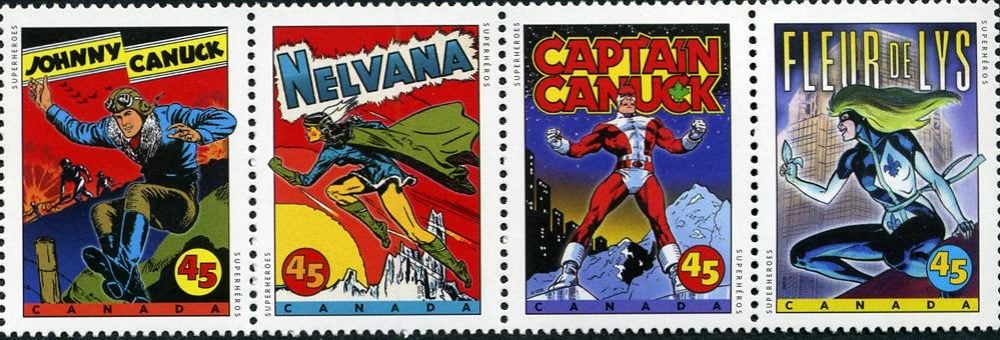
TRUE NORTH (Animation)
True North, which was broadcast nationally in 1974, was the first successful attempt to include animated characters in a documentary film on Canadian politics and life.
TRUDEL Nicole
This illustrator and cartoon artist now living in Toronto was born in Winnipeg.
WORK:
ILLUSTRATOR:
BOOK GRAPHIC ANTHOLOGY:
Content story:
Toronto Comics vol., 2, Ed., Steve Andrews, et al. Toronto Comics Anthology, May 2015: “Sultan Of Hanlon’s Point”. Writ., Robert Shapiro: 172-181.
SOURCE:
Article book:
Toronto Comics vol., 2, Toronto Comics Anthology, May 2015: “Nicole Trudeau”: 196 .
TRILLIUM PRODUCTIONS
Trillium Productions was part of the Al Guest group of companies based on University Ave. in Toronto. These were owned and operated by the husband/wife team, Al Guest from Winnipeg an animation cameraman and former editor at CBC and his wife Jean Mathieson a prominent animator in her own right.
The operation began in 1957 as Spectrum Productions doing commercials for advertisers. Eventually the company settled on the name Al Guest Animation. It was a well-established company when it decided to enter the field of animated television serials. Herein lies a cautionary tale.
Al Guest signed a million dollar contract with Steve Krantz to do fifty-two, twenty-two minute episodes of an animated series to be called Rocket Robin Hood (1966 to 1969). Trillium Productions part of the Guest Group of Companies was probably specifically founded to handle this project. Steve Krantz was an American animator and film producer who had set up Krantz Films in Canada and probably the deal was done through that organization.
Although billed as a Canadian animated television series the agreement appears to have been more a service contract. Ownership of the property was in the hands of Steven Krantz, who financed it. Shamus Culhane the initial director was an American animator. Ralph Bakshi who replaced him was another American animator. Bakshi is credited as the writer although he came into the production late. It appears that the stories were essentially classic Robin Hood conflicts relocated into the future, year 3000 and onto an asteroid called new Sherwood Forest. Apparently, a sale to CBC qualified it as Canadian.
Relations between the two men quickly deteriorated. The issues appeared to be quality of the product and missed deadlines. Quality problems were probably due to the fact this was Trillium’s first venture into the field and there was a steep learning curve. But cost was also a big issue. Bakshi later commented that while episodes under Shamus Culhane who he replaced cost $18,000, he produced them for $14,000 saving Krantz four thousand dollars an episode. Also it is said Krantz’s quest for bigger profits drove into bankruptcy Grantray-Lawrence Animation another Canadian company founded by American film makers probably to take advantage of the Canadian government’s efforts to support Canadian made productions. Kantz ended up owning its product as well. This quest for bigger profits must have also been a factor in the product’s quality. Relations between the two men degenerated into legal conflict each suing the other on various issues. At this point, Krantz decided to switch production to New York. He tasked Bakshi who was commuting between New York and Toronto to grab production materials like model sheets when he was in Toronto and bring them back to New York. Bakshi did this, managed to elude the police, (there was a warrant out for his arrest) and escaped across the border. The third season of Rocket Robin Hood was done in New York although the voice aspects were still done in Toronto probably at Krantz Films.
Al Guest was financially too weakened to launch a suit against Krantz in New York and without product he was forced to liquidate his companies and leave Canada for England probably to avoid the obligations he had accumulated as a result of the Rocket Robin Hood project. Vladimir Goetzelman a former employee founded Cinera Productions and hired many of the staff left unemployed by the Guest group’s collapse. Later Al returned to Toronto but was never able to re-establish himself there. He and Jean Mathieson finally left for the U.S. where they eventually rebuilt their careers.
SOURCE:
Article book:
Cartoon Capers. Writ., Karen Mazurkewich. McArthur & Co.: 131-133.
Article periodical:
Internet:
academickids.com/encyclopedia/index.php/Grantray-Lawrence_Animation
www.cbc.ca/television/tbt-when-rocket-robin-ruled-outer-space-1.5139219
cartoonresearch.com/index.php/rocket-robin-hood
www.kevinmccorrytv.ca/rrobin
en.wikipedia.org/wiki/krantz-Films
en.wikipedia.org/wiki/Rocket-Robin-Hood
TRIGGER DUNSTAN
Created by cartoonist Hunter Barker, nothing is presently known about either the cartoon or its creator, except it appeared in Top Flight Comics, 1-1, February 1942, the only issue Hillborough Studio published before ceasing operations. This and “The Searunners” seem to have been the only works done by this author.
MEDIUM:
PERIODICAL GRAPHIC ANTHOLOGY:
Content serial:
Top Flight Comics, 1-1, February 1942.
TREMBLAY Wyatt
WORK:
CARTOONIST:
Content cartoon editorial:
Caricature . Cartoons Canada. Ed., Terry Mosher. Linda Leith Publishing, 2012: 78.
TREMBLAY Jack
Born 1 May 1926 in Providence Rhode Island, U.S.A. The family first migrated to Fort William (now Thunder Bay Ontario) and then on to Montréal. He was eight years old at the time.
Jack grew up at a time when cartoon strips and cartoon periodicals were a major form of entertainment in North America. From weekend supplements like “Tarzan” and “Flash Gordon” he learned the elements of figure drawing and from Superman and Batman he saw the possibilities of the graphic periodical. He also had access to British boy’s magazines like The Triumph and The Champion and from them came his “inspiration in writing exciting adventure stories”. His favourite character was “Rockfist Rogan” a boxer and an R.A.F. pilot flying Hurricanes and Spitfires. It is easy to see that this character and his setting were the inspiration for Jack’s character “Crash Carson” and perhaps Jack’s ability to accurately draw World War 2 aircraft.
In 1939 at the age of thirteen years he began producing mini comics which he wrote, drew, coloured, and assembled himself. He sold them in his Côte St. Paul neighbourhood for five cents a copy. He created characters like the “Panther”, a “Batman” look alike. His teacher suggested that he buy a bottle of India ink and submit his work to a publisher. His first entry was a drawing published in Better Comics 3, May 1941, a periodical published by Maple Leaf Publishing. Co. Then in the fall of 1941 the recently started Bell Features. created a drawing contest in WOW Comics 2, November 1941. Jack entered and won a pair of rolling skates. Encouraged by this win, he sent in a feature “Crash Carson” that he had been working on over the winter of 1941/42. Bell Features accepted it and “Crash Carson” appeared in WOW Comics 8 in the spring of 1942. A few months later Bell Features launched a new periodical called Commando Comics and asked Jack to contribute a serial to it. He created “Wings Over The Atlantic”. He worked on this feature for three issues then André Kulbach assumed cartooning duties for it. Also during this time he illustrated one of the colouring books in Educational Products “Famous Stories In Paint Books” series. In WOW Comics 16, “Crash Carson and His Devil’s Angels” made their last appearance. Jack was offered a summer job in the publicity department of Defense Industries Ltd. which paid well. He first went to Bell Features and requested an increase in the three dollars per page Bell was paying him. Unknown to him other contributors were getting five and six dollars a page. Bell refused to give Jack a raise and so he left for the better paying D.I.L. While there. he and the Art Director Eileen who did occasional work for a children’s magazine partnered to produce a colouring book called A Cowboy Story and Coloring Book.
By September 1944, he was finally old enough to join the Canadian Army. He went to boot camp but before he could train as a paratrooper the war in Europe ended. He volunteered to join the conflict in the Pacific, but it as well suddenly ended.
It had been about the time he started working for Bell Features that Jack had begun his first formal art training at L’École des Beaux-Arts. This effort had been dropped and it was only after the war that Jack resumed his studies. His interest in cartooning adventure stories and the opportunities to do them declined and he entered ad agencies as a freelance illustrator and got into book production both as an illustrator and a writer/illustrator. One of his early projects was writing and illustrating Ten Canadian Legends published by Brunswick Press. For Canada’s centennial year he returned to Brunswick Press to write and illustrate eight of a series of Canadian history booklets called The Story of Canada under the moniker “ A Beaver Book for Young Canadians”.
In the 1970’s he began illustrating journalist Greg Clark’s columns in the Weekend magazine. In this he joined a series of Canadian icons including Jimmie Frise and Duncan Macpherson who had previously illustrated Greg’s work. Later he was responsible for a series of dust jacket illustrations for Clark’s books. Interestingly enough he never met Greg. Their contact was through the telephone.
About this time he assumed the pseudonym Jean-Jacques Tremblay and began selling paintings through galleries. His first solo exhibit was at Galerie Libre in Montréal in 1976.
In late 2014, Jack returned to sequential art, self publishing a digest sized experimental publication called Esthetic Comics limited to one hundred copies. It was sold at Conventions in the Montréal area. Its style was reminiscent of the 1960/70’s underground commix.
He died 11 November 2018.
WORK:
CARTOONIST:
PERIODICAL GRAPHIC:
Content serial :
| WOW Comics, …. Bell Features & Publishing Co. Ltd. |
| 9, no date: “Crash Carson and His Devil’s Angels”: 34-47
10, no date: “Crash Carson and His Devil’s Angels”: 36-47. 13, no date: “Crash Carson and His Devil’s Angels: 36-45. |
ILLUSTRATOR:
BOOK TEXT:
Content history:
Canada’s First Bank. Writ., Merrill Denison. McClelland & Stewart, 1966. Painting: “First Great Canal Project”: 199. Part of a group of artists: Lorne Bouchard, Douglas Johnson, Bruce Johnson, Will Davies, William Kurelek, Henry Simpkins, Stuart Main, Gerald L. Sevier, Roy Hewitson , James Walker, Fred Oakley, Don Anderson, Franklin Arbuckle, Alex Taylor, Tom McNeely, Lewis Parker, Huntley Brown, Jerry Lazare commissioned for this work.
Content essay & Cover dust jacket wrap around:
Grandma Preferred Steak. Writ., Gregory Clark. Infocor Ltd. 1974.
PERIODICAL TEXT:
Content essay:
| Weekend Magazine, vol.-no, date: Title: Writ., Greg Clark: pages |
| 20-51, Dec. 19, 1970: “Ellie & The Myth Of Christmas”: 22-23.
21-11, March 13, 1971: The Mystery Of The Downtown Throng”: 14-16. 21-18, May 1, 1971: “The Bird Of Promise”: 8-9. 22-32, August 5, 1972: “Then He Kissed The Most Beautiful Girl”: Aug. 5, 1972: 18-19. |
Content poem:
Weekend Magazine, 13 May 1972: The Battle Of Batoche”. Writ., Al Purdy: 23, 24-25.
ADAPTER & ILLUSTRATOR:
BOOK TEXT & ILLUSTRATION:
Content legend & Cover book front & back:
Ten Canadian Legends: A Story From Each Province In Canada. Brunswick Press (University Press of New Brunswick), 1955: 1-32.
WRITER & ILLUSTRATOR:
BOOKLET TEXT & ILLUSTRATION: Part of Story of Canada series published by Brunswick Press, 1967. A “Beaver Book for Young Canadians”.
Content (History) & Cover (book front wraparound):
No. 1: Canadian Pacific: The Story of the Greatest Railroad
No. 2: Billy Bishop: Hero of the Air.
No. 3: The First Mounties: The Story of the North-west Mounted Police.
No. 4: The Mighty St. Lawrence: From Jacques Cartier to the Seaway.
No. 5: Louis Cyr: The Story of the Strongest Man Who Ever Lived.
No. 6: Captain White Bear: The Story of Captain Bernier.
No. 11: Bluenose: Queen of the North Atlantic.
No. 12: The Birth of Hockey: Canada’s National Sport.
SOURCE:
Article book:
The Canadian Alternative: Cartoonists, Comics, and Graphic Novels. Ed., Dominick Grace & Eric Hoffman University Press of Mississippi. 2018: “Alternatives Within An Alternative Form.” Writ., Ivan Kocmarek: 3-15.
Heroes Of The Home Front, North End Books, 2018: “Tremblay Jack.” Writ., Ivan Kocemarek. 285-286.
Article periodical:
Comic book Creator, 21, Fall 2019: “Trembles Confesses: “I Was the Son of a Superior Artist.” Writ., Rick Trembles: 32-39. (In addition to a mini biography of his father. It is an interesting account of the relationship between father and son.
Interview book:
Heroes Of The Home Front, North End Books, 2018: “Ivan Kocmarek interviews Jack Tremblay.” 287-290.
GALLERY:
 An image of a mini comic by Tremblay, comic book CREATOR, 21, Fall 2019: 34
 Ten Canadian Legends,1955: 10.
 No. 2: Billy Bishop. 1967: Front cover.
 No. 2: Billy Bishop. 1967: 10-11.
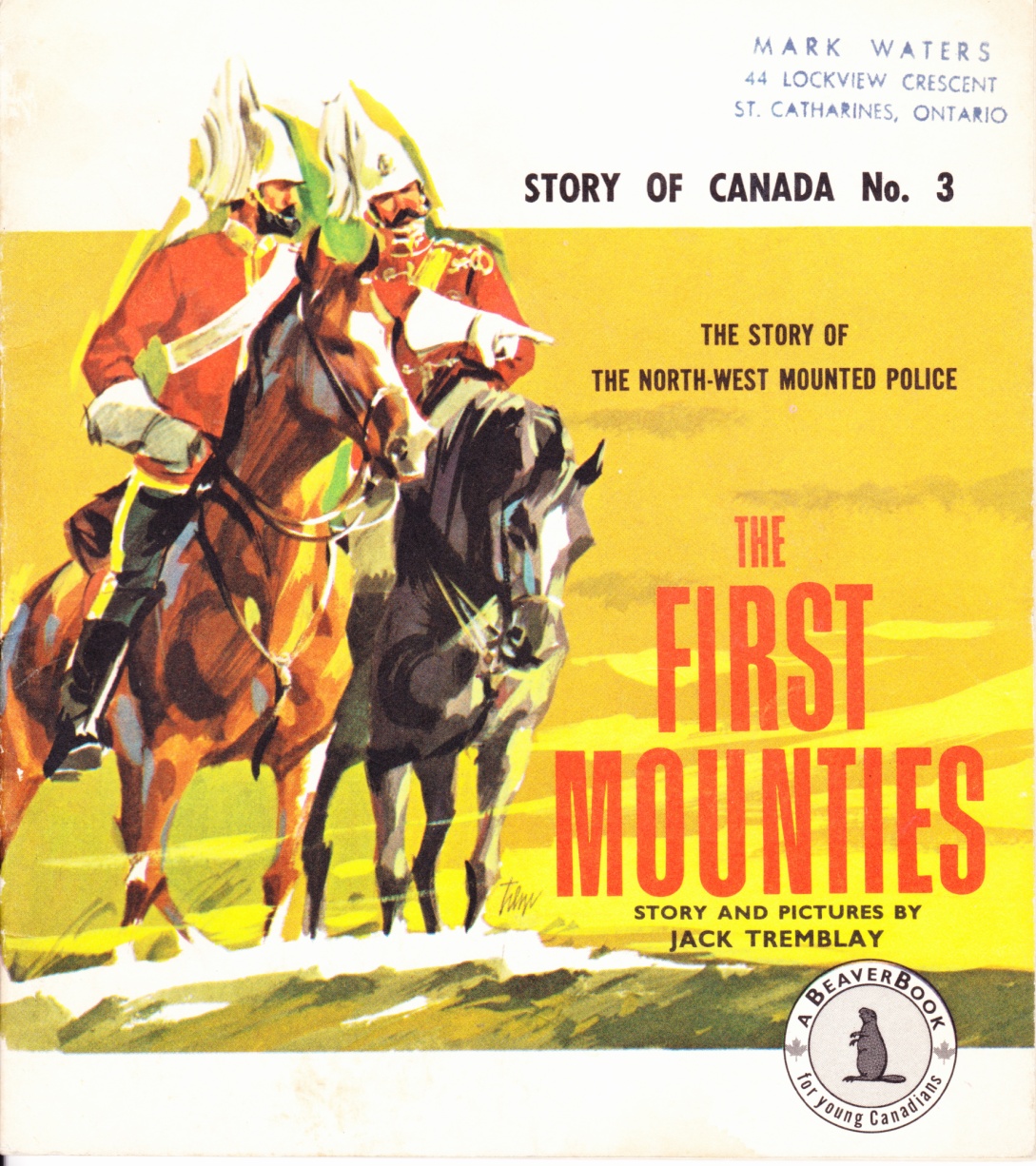 No. 3: The First Mounties. 1967. Front cover.
 No. 3: The First Mounties. 1967: 10-11.
 No. 5: Louis Cyr. 1967: Front cover.
 No. 5: Louis Cyr. 1967: 10-11.
 No. 11: Bluenose. 1967: Front cover.
TRAGEDY STRIKES PRESS Location: 90 MacDonell Street, Guelph, Ontario Founder/Owner: Michel Vrana.
Contributors: Brian Briggs, Ed Bruckner, Nick Craine, Dylan Horrocks, Jason Lutes, John McLeod, Matt Madden, Darren Raye, Sean Scoffield, Jay Stephens, Swain Carol.
This publishing company was started by Michel Vrana in 1991 and was replaced by Black Eye Productions in 1992/3.
PRODUCT:
PERIODICAL GRAPHIC:
| The Cheese Heads,… Car., Nick Craine. Editor, Michael Vrana. Publisher, Shane Kenny. Colour cover. Black & white interior | ||||
| 1, March 1991. | 2, Nov. 1991. | 3, Jan. 1993. | 4, June 1992. | 5, Oct. 1992 |
| SIN,… Car., Jay Stephens. Editor & Publisher, Michael Vrana. Colour cover. Black & white interior | ||||
| 1, June 1992. | 2, Aug. 1992. | Oct. 1992. | 4, Dec. 1992. | 5, Feb. 1993. |
SOURCE:
Web:
“Black Eye Productions.” Wikipedia the free encyclopedia, 30 May 2017. Accessed 5 February 2018.