CARR Emily

CARR Emily

This iconic painter who was a contemporary of the Group of Seven produced editorial cartoons during 1905 and 1906 for The Week, a literary and political publication in Victoria, where she lived.

WORK:

WRITER & ILLUSTRATOR:

BOOK TEXT:

Klee Wyck. Oxford University Press, 1941.

The Book of Small. Oxford University Press, 1942.

The House of All Sorts. Oxford University Press, Nov. 1945.

Growing Pains: The Autobiography of Emily Carr. Oxford University Press, 1946.

Pause: An Emily Carr Sketch Book. Clark, Irwin & Co. Ltd., 1972.

Sister and I in Alaska. Figure 1 Publishing, 2014..

Sister and I from Victoria to London. Royal B.C. Museum, 2012.

SOURCE:

Article book:

The Hecklers. Writ. & Ed.., Peter Desbarates & Terry Mosher. McClelland & Stewart Ltd., 1979: 232.

Article periodical:

British Columbia History, 54-4, Winter 2021: “Emily Carr Cartoonist” Writ., Robert Ratcliff: 31-36.

GALLERY:

A picture containing text, book
Description automatically generatedBritish Columbia History, 54-4, Winter 2021: 31. From The Week April 1, 1905.

Text
Description automatically generated with medium confidenceBritish Columbia History, 54-4, Winter 2021: 32. The Week February 25, 1905.

A group of women sitting at a table
Description automatically generated with medium confidenceBritish Columbia History, 54-4, Winter 2021: 33. The Week, August 5, 1905.

CARLISLE William O

CARLISLE William O.

He was a topographer for the British Army stationed in Canada in the 1870’s. He contributed cartoons in woodcut form to The Canadian Illustrated News, and l’Opinion Publique. After returning to England he published a book of drawings, Recollections of Canada.

SOURCE:

Article book:

The Hecklers. Writ. & Ed.., Peter Desbarates & Terry Mosher. McClelland & Stewart Ltd.,1979: 232.

CARLESS Roy

CARLESS Roy (ROI)

C:\Users\Robert\Documents\CARTOONING ILLUSTRATION ANIMATION\IMAGE OF PERSON\C\CARELESS Roy, Carless Cartoon Collection, 2006, 191.jpg                                              The Carless Cartoon Collection, 2006: 191.

“I never draw anything that discriminates against working people, Which includes damn near all of us …”                                                                                                  The Hecklers: 232.

Born 1920 in Swansea, Ontario.

He moved to Hamilton in the late 1940’s and became involved in Union work, drawing cartoons for the local’s paper. He expanded into freelance work, keeping his regular job. With encouragement from Duncan Macpherson, he continued to draw for as many as 20 labour publications a month.

WORK:

CARTOONIST:

BOOK GRAPHIC ANTHOLOGY:

Content editorial cartoon:

Best Canadian Political Cartoons, 1983. Ed., N.M. Stahl. For., David Rosen. McClelland & Stewart Ltd. Sept. 1983: 19, 24, 88, 134.

Best Canadian Political Cartoons, 1984. Ed., N.M. Stahl. For.,Robert LaPalme. McClelland & Stewart Ltd. Sept. 1984; 72, 79, 170

Portfoolio 21: The Year’s Best Canadian Editorial Cartoons. Ed., & Writ., Guy Badeaux. McArthur & Co. 2005.

Portfoolio 22: The Year’s Best Canadian Editorial Cartoons. Ed., & Writ., Warren Clements. McArthur & Co. 2006.

BOOK GRAPHIC COLLECTION:

Content editorial cartoon &Cover book front:

The Carless Cartoon Collection. Seraphin Editions, 2006.

SOURCE:

Article book:

The Hecklers. Writ. & Ed.., Peter Desbarates & Terry Mosher. McClelland & Stewart Ltd., 1979: 232.

Portfoolio 21: The Year’s Best Canadian Editorial Cartoons.2005:“Roy Carless”.

GALLERY:

C:\Users\Robert\Documents\CARTOONING ILLUSTRATION ANIMATION\IMAGE BY CARTOONIST\C\CARLESS Roy, Carless Cartoon Collection, 48.jpgThe Carless Cartoon Collection, 2006: 48

C:\Users\Robert\Documents\CARTOONING ILLUSTRATION ANIMATION\IMAGE BY CARTOONIST\C\CARLESS Roy, Carless Cartoon Collection, 175.jpgThe Carless Cartoon Collection, 2006:175.

CARDOW Cameron

CARDOW Cameron (CAM)

C:\Users\Robert\Documents\CARTOONING ILLUSTRATION ANIMATION\IMAGE OF PERSON\C\CARDOW Cameron, Editorial Cartoons of ..., 1990,.jpg                                          The Editorial Cartoons of Cam, 1990: Back page.

Born in 1960 in Ottawa and raised there.

He studied illustration and animation at Sheridan College in Brampton and Oakville. In 1984 he began his career as a staff artist at the Ottawa Citizen and later was assigned to do one editorial cartoon a week. In 1987 he moved to the Regina Leader Post as editorial cartoonist. While working there in 1989 he became winner of the National Newspaper Award. Also in 1989 he founded Syndicam Productions to facilitate distributions of his cartoons. It was one of the first syndicates of its kind.

In April 1997 he joined the Calgary Herald as Art Director but quickly moved to Telus as a web editor. There he managed a team of web designers developing corporate websites. He left Telus to become self employed. In 2008 while working for the Ottawa Citizen, he won a National Newspaper Award. In 2010 he remains editorial cartoonist of the Ottawa Citizen.

His work has appeared in such Canadian dailies as the Globe and Mail, National Post and Toronto Star and in many international publications such as New York Times, Time Magazine, and Los Angeles Times. His work has also been featured on CBC, CNN and NBC. His work has been exhibited in art galleries.

WORK:

CARTOONIST:

BOOK GRAPHIC ANTHOLOGY:

Content editorial cartoon:

Caricature . Cartoons Canada. Ed., Terry Mosher. Linda Leith Publishing, 2012: 42.

Portfoolio, The Year 86 In Canadian Caricature. Ed., Guy Badeaux. Writ., Charles Gordon. Ludcom Inc. 1986.

Portfoolio, The Year 87 In Canadian Caricature. Ed., Guy Badeaux . Ludcom Inc. 1987.

1988 Portfoolio, The Year In Canadian Caricature. Ed., Guy Badeaux . Writ., Charles Gordon. Eden Press. 1988.

Portfoolio: 1989 in Canadian Caricature. Ed., Guy Badeaux . Writ., Charles Gordon. Macmillan of Canada, 1989.

Portfoolio …: The Year in Canadian Caricature. Ed., Guy Badeaux . Writ., Charles Gordon. Macmillan of Canada, ….
6: 1990. 7: 1991. 8: 1992. 9: 1993.
Portfoolio…: The Year’s Best Canadian Editorial Cartoons. Ed., Guy Badeaux . Writ., Ken MacQueen Macmillan of Canada, ….
10: 1994. 11: 1995. 12: 1996.
Portfoolio …. The Year’s Best Canadian Editorial Cartoons. Ed., Guy Badeaux . Writ., Jay Stone Macmillan of Canada, …
13, 1997. 14, 1998. 15, 1999.

Portfoolio 20: The Year’s Best Canadian Editorial Cartoons. Ed. & Writ., Guy Badeaux . McArthur & Co, 2004.

Portfoolio 22: The Year’s Best Canadian Editorial Cartoons. Ed., & Writ., Warren Clements. McArthur & Co.2006.

BOOK GRAPHIC COLLECTION:

Content editorial cartoon:

The Editorial Cartoons of CAM. Fifth House Publishers, 1990.

BOOK TEXT & GRAPHIC:

Content:

Comment:

Hoods On The Hill. Writ., Senator Royce Firth. Coach House Press, 1991: 22 & 56.

Not Politically Correct. Writ., Ric Dolphin. Stewart House, 1992.

Religious:

Reflections. Writ., David Collins. Forever Books, 2010. Used editorial cartoons by Cardow

SOURCE:

Article book:

Portfoolio, The Year 86 In Canadian Caricature.1986: “Cameron Cardow”: 195.

Portfoolio 14: The Year’s Best Canadian Editorial Cartoons. 1998: “CAM.”

Portfoolio 22: The Year’s Best Canadian Editorial Cartoons, 2006: “CAM”: 147.

Internet:

Syndicam Productions – About Syndicam – About CAM

GALLERY:

C:\Users\Robert\Documents\CARTOONING ILLUSTRATION ANIMATION\IMAGE BY CARTOONIST\C\CARDOW Cameron, Leader Post, 26 Mar 1989.jpg1989 National Newspaper Award Winner, Leader-Post [Regina] 25 Mar. 1989.

C:\Users\Robert\Documents\CARTOONING ILLUSTRATION ANIMATION\IMAGE BY CARTOONIST\C\CARDOW Cameron, Portfoolio 1989, fc..jpg Portfoolio 1989: Front cover, from Leader-Post [Regina] 1989.
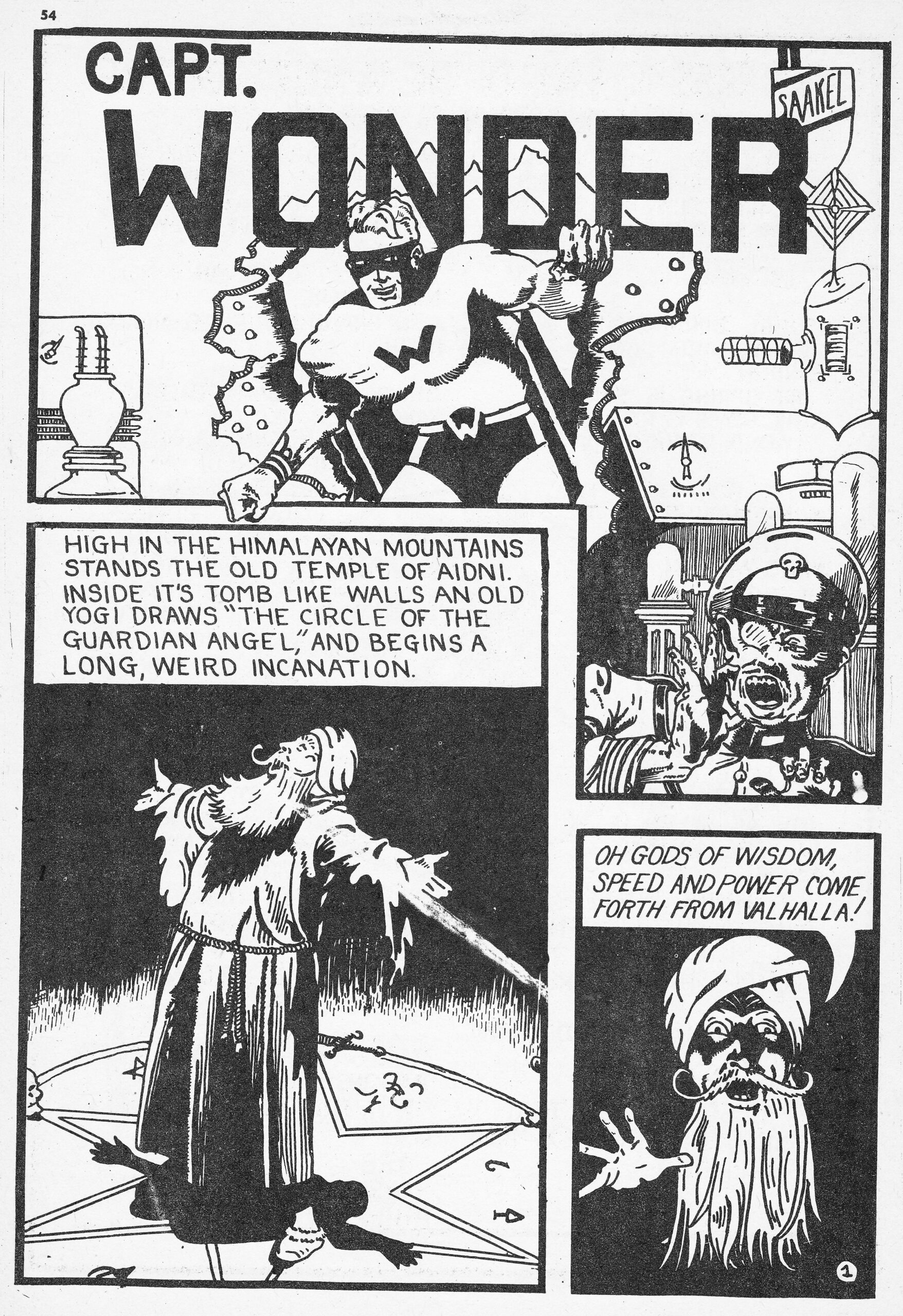
CAPT. WONDER

CAPTAIN WONDER

To create his character Ross Saakle borrowed liberally from the Batman and Superman models. A Canadian orphan whose parents were murdered by a criminal, lives for twenty years with “Yogi” in the Temple of Aidni in the Himalayan Mountains. He is transformed into a hero with the same powers as Superman. He of course wants to avenge his parents by fighting criminals back in Canada. As the story progresses he forms a close relationship with a police commissioner.

“Captain Wonder’s” first encounter is with a mad scientist called Frank N. Stein where he saves the “girl” and her brother from being turned into monsters. The second and most interesting story in the “Captain Wonder” series is the three issue (9-11) tale where “Captain Wonder” battles Satan in order to save “the girl”. The tone of this story makes one think they are watching a battle between two comedians. It ends with “Captain Wonder” victorious but Satan planning a second round with this “worthy opponent”. It seemed like Ross was onto something with the devil theme, but unfortunately it was never revisited. Instead, the serial becomes a standard good guys versus bad guys feature. The energy seems to leak out of it..

In Triumph 18 “Captain Wonder” does a guest appearance in a “Speed Savage” story. In issues 22 and 23, to the usual mix of good guy versus bad guy Ross added a group of young lads. “Captain Wonder” shows them that bad guys are cowards not worth emulating. It was an interesting effort to reduce any attraction bad guys might have for young readers. This was not the first time Ross attempted to instruct his readers. Often the last panel of each adventure, was devoted to admonishing readers to help the Canadian war effort through buying Canada Savings Bonds. Back in Triumph 12, Ross had invited his readers to tell him about their ideas, slogans and activities in support of the war effort and he would publish them in the last panel of each “Captain Wonder” story. It was an effort that lasted only a couple of issues.

At least initially, “Captain Wonder” is different from most other Canadian wartime serials. Ross makes it very clear the episodes are located in Canada. From the beginning we are told he is returning to Canada to fight crime, and when place names are given they are Canadian locations, like the 1000 islands in the St Lawrence. Ross also made “Captain Wonder” saving damsels in distress a regular feature of his serial. Unlike nearly all of the other wartime serials, “Captain Wonder” episodes deal largely with gangsters and rarely with Nazi agents, although it is interesting how he incorporates references to the war through the side comments of the characters and as mentioned above each adventure usually ends with “Captain Wonder” encouraging readers to help the Canadian war effort.

Unlike the “Batman’ and “Superman” stories which are deadly serious, Ross injected a casual almost flippant tone into his tales with a liberal use of puns, wise cracks, in jokes and sight gags. He played with names like “Frank N. Stein”. Was “Dr. Ranting” the Canadian scientist a play on Dr. Banting the co-discoverer of insulin? Certainly “Bachle Bluffs” was a play on the name of his fellow cartoonist Leo Bachle. An example that joins his sense of place with his sense of humour occurs in the issue 8 story. The location of the Nazi agents’ base is an island among the St. Lawrence River’s thousands islands. At the climax of the story the Nazis and the island are blown up. In the last panel of the story we see “Captain Wonder” and his companions looking at a “Welcome To The 1000 Islands” sign where 1000 has been stroked out and 999 has been added.

As I said earlier the originality and vitality of the serial declines after the Satan story. Was he tiring of the character or was he simply overworked? He was at the time cartooning “Ace Barton”, “ The Noodle” and “Spike & Mike” while also cartooning and illustrating games, features and stories. Whatever the reason, “Captain Wonder’s” humorous battle with Satan is the strongest in this series.

MEDIUM:

PERIODICAL ANTHOLOGY:                                                                                            Published by Bell Features & Publishing

Content serial:

Triumph Comics, …, no date: “Captain Wonder.” Car., Ross Saakle: …. Black & white.
No number: 54-63. 08:54-62.

09: 53-59.

10: 51-56.

11: 49-57.

12: 48-57.

13: 44-50.

14: 45-51.

15: 44-50.

16: 43-49.

19: 22, 24, 25* 20: 19-25. 23: 11-17.

*The pages for this story are out of order and some seem to be missing.

GALLERY:

C:\Users\Robert\Documents\CARTOONING ILLUSTRATION ANIMATION\IMAGE CARTOON\IMAGE CARTOON C\CAPTAIN WONDER, Triumph, nn, 54.jpgOrigin story. Triumph Comics, no number, no date: Cart., Ross Saakle: 54.

C:\Users\Robert\Documents\CARTOONING ILLUSTRATION ANIMATION\IMAGE CARTOON\IMAGE CARTOON C\CAPTAIN WONDER, Triumph, nn, 55.jpg Origin story. Triumph Comics, no number, no date: Cart., Ross Saakle: 54.
CAPT. TAX TIME

CAPTAIN TAX TIME

This unusual character was the brain child of Paul Haynes, owner and director of Tax Time Services of Oakville, Ontario. It was conceived as a serial to be published quarterly. The suggested selling price was $4 Canadian, and it was intended to be sold through stores, and indeed was sold through at least one store. None of this went any further, and the first issue became the only issue.

The Art Editor and colourist for the cover was Wayne Gilbert who taught in the Sheridan College. He was also a water colourist, worked on independent films and directed the International Summer School of Animation. The cartoonists Ted Collyer and Terry Rottsaert were third year students in animation program.

The story was released during the run up to the introduction of the General Sales Tax (GST) which commenced 1 January 1991. The Minister of Finance who transformed into “The Grabber” and his assistant “Claw” created the G.S.T. Captain Tax Time whose base in hidden among the glaciers in the arctic and his ally “Sergeant Saver” fought this scheme by attacking the criminal element, drug lords, crooked corporations and criminal king- pins. It turned out that “The Grabber” and the criminal element were allied. The confrontation occurred at their headquarters from which, after a battle our tax fighting duo took $30 billion dollars and presented it to Parliament making the G.S.T. unnecessary. However, “The Grabber” transformed into “The Enforcer” and here was sent the stage for a serial which did not occur.

MEDIUM:

PERIODICAL GRAPHIC:

Content serial :

Captain Tax Time. Car., Ted Collyer & Terry Rotsaert. Writ. Assist., Paul Haynes. Cov. Colo., Wayne Gilbert. Ed., Paul Haynes & Wayne Gilbert. Paul Haynes Comics, Sept. 1990.

Source:

Promotion kit.

GALLERY:

C:\Users\Robert\Documents\CARTOONING ILLUSTRATION ANIMATION\IMAGE COMIC BOOK COVERS\Captain Tax Time, 1..jpg

CAPT. STARSHIP

CAPTAIN STARSHIP

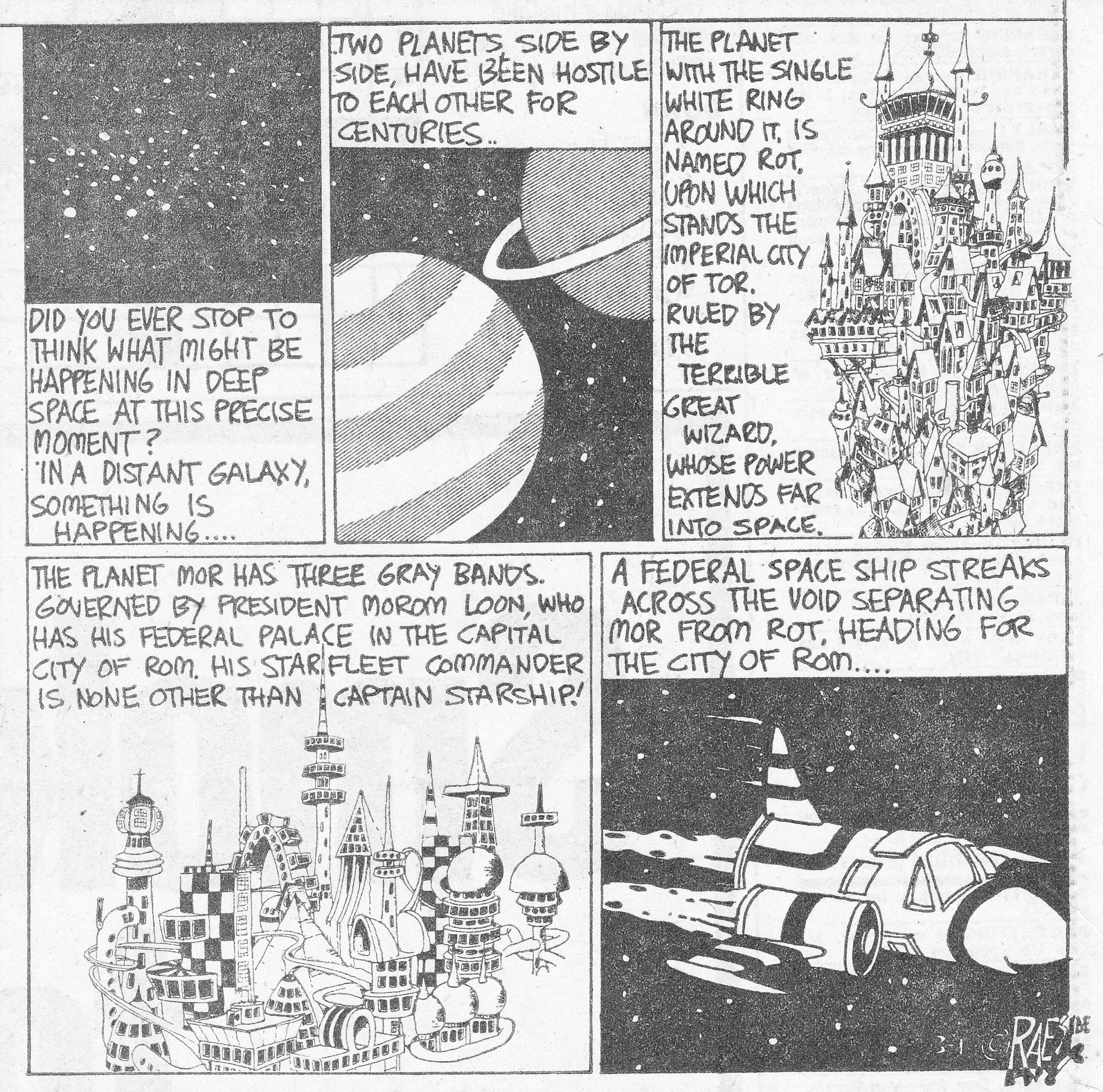
“Captain Starship” was a humorous science fiction serial created by political cartoonist Adrian Raeside exclusively for the Toronto Star’s “Starship’ page for children.

“Captain Starship” replaced “George and Jacques” in April 1979 when the latter was cancelled amid controversy. “Captain Starship” stopped appearing in the Toronto Star after September 1991. The strip was ended by a kind of mutual agreement. There had been a good relationship between Adrian and his editor Ann Farrell but after she left the Toronto Star the relationship with the new editor was not so harmonious.

SOURCE:

Correspondence:

Based on an email from Adrian Raeside, Sept. 10, 2007.

GALLERY:

C:\Users\Robert\Documents\CANADIAN CARTOONING ILLUSTRATION and ANIMATION\IMAGE CARTOON C\CAPT STARSHIP, Toronto Star, 1 May, 1979, C8.jpgFirst Capt. Starship, Toronto Star 1 May 1979: Car., Adrian Raeside.

C:\Users\Robert\Documents\CANADIAN CARTOONING ILLUSTRATION and ANIMATION\IMAGE CARTOON C\CAPT STARSHIP, Toronto Star, 2 May 1979, C8.jpgSecond Capt. Starship: : Car., Adrian Raeside.

C:\Users\Robert\Documents\CANADIAN CARTOONING ILLUSTRATION and ANIMATION\IMAGE CARTOON C\CAPT STARSHIP, Toronto Star,18 June 1981.jpgSecond to last Capt. Starship, Toronto Star, 18 June 1981: Car., Adrian Raeside.

C:\Users\Robert\Documents\CANADIAN CARTOONING ILLUSTRATION and ANIMATION\IMAGE CARTOON C\CAPT STARSHIP, Toronto Star, 19 June 1981.jpgLast Capt. Starship, Toronto Star, 19 June 1981: : Car., Adrian Raeside.

C:\Users\Robert\Documents\CANADIAN CARTOONING ILLUSTRATION and ANIMATION\IMAGE CARTOON C\CAPT STARSHIP XMAS, Toronto Star, 13 Dec 1979, b16.jpgToronto Star, 13 De4c. 1979: Car., Adrian Raeside: B16.
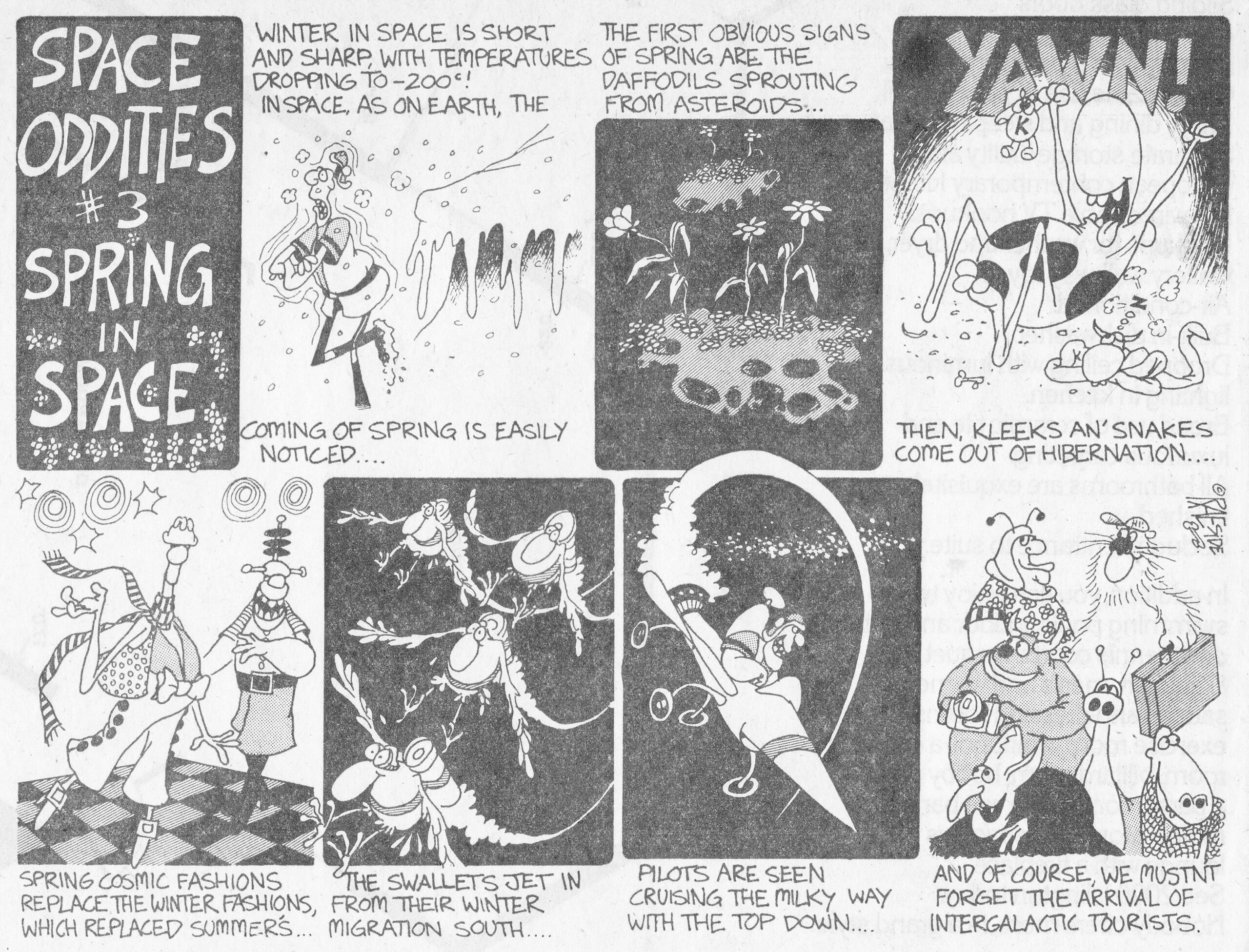
C:\Users\Robert\Documents\CANADIAN CARTOONING ILLUSTRATION and ANIMATION\IMAGE CARTOON C\CAPT STARSHIP, Toronto Star, unknown.jpgToronto Star, unknown: Car., Adrian Raeside.

CAPT. RED THORTAN

CAPTAIN. RED THORTAN

This character and “Scotty MacDonald” both created by Al Cooper appeared in Active Comics and Dime Comics respectively for February 1942, making them among the first characters created under the Commercial Signs later Bell Features and Publishing banner.

“Captain Red Thortan” who Al modelled on a friend who later became his brother-in-law is an adventurer travelling the four continents. When World War 2 broke out he uses his skills to aid British and American forces against the Japanese in the jungles and oceans of southeast Asia. Initially he is partnered with Lieutenant Harley. They are in the Malayan jungle where the “Captain” saves a British convoy. He then rescues a British Commander’s daughter who has been kidnapped by the Japanese. Both he and Farley continue to fight the Japanese. They emerge from the jungle to the coast and board an apparently abandoned junk which it turns out is captained by “Sing Tong” an old friend of “Captain Red”. The trio capture a Japanese destroyer and encounter and American torpedo boat with which they partner. More coastal battles in partnership with the Americans. “Lieutenant Harley” and “Sing Tong” disappear from the story, “Capt. Red” returns to the jungle to immediately rescue a Dutch female from Japanese soldiers. Active 13 has no episode, but rather a panel telling readers that Al has joined the R.C.A.F. but “Captain Red Thorton” will continue which it does under Al’s authorship. “Captain Red” is now helping natives to fight the Japanese. As can been seen below the episodes are about half the size they were earlier. Issues 15 and 16 are unidentified and the drawing quality has somewhat deteriorated. “Captain Red Thortan” continues through issues 17 and 18, but there is no episode in issue 19. Finally, Fred Kelly takes over with issue 20. Under Fred’s hand “Captain Red Thortan” still fights the Japanese but as well as a jungle fighter, he is now a skilled pilot flying a Mosquito aircraft.

In issue 25, action turns from fighting the Japanese to busting opium ring, a good indication that in response to the end of World War 2, Bell Features was switching to civilian stories. This effort was short lived and “Captain Red Thortan” ended in issue 27 as Bell Features attempted to survive by importing American product.

The first four episodes of this serial as well as those of “Scotty MacDonald” trace Al Cooper’s improvement as a cartoonist. In the beginning his story telling was rather stilted and his drawings without nuance. Panels were large and predominantly regular. The figures almost had the simplicity of colouring book figures. Over a quite short period the illustration work became more interesting with more complex panel construction and he is increasingly effective in his use of blacks. Al’s strength was his drawing of military equipment, and he used this in his work to increasing advantage. At times, the ships and aircraft almost become characters themselves. When Al entered the R.C.A.F. his work on “Captain Red Thortan” became less polished perhaps better described as rushed since he worked on it and “Scotty MacDonald” at night after he had finished his duties. It is not surprising that only five issues after Active 13, he left the serial altogether since he was transferred to England. Fred Kelly took over the series.

MEDIUM:

PERIODICAL GRAPHIC ANTHOLOGY:

Content serial:

Active comics …: “Capt. Red Thortan.” Car., Al Cooper: …. Commercial Signs of Canada. Black & white
1, Feb. 1942: 32-46. 2, Mar. 1942. 34-48. 3, no date: 17-30.
Active comics … no date: “Capt. Red Thortan.” Cartoonist., Al Cooper except where otherwise noted: …. Bell Features & Publishing Co. Black & white.
4: 38-49.

5: 38-49.

6: 36-47.

7: 35-46.

8: 39-50.

9: 39-50.

10: 26-34.

11: 13-21.

12: 14-21.

13: 17.

14: 11-15.

15: Car., unidentified: 11-15.

16: Car., unidentified: 35-40.

17: 24-29.

18: 17-22.

19: No Captain Red Thortan

Active comics … no date: “Captain Red Thortan.” Cartoonist, Fred Kelly: … Bell Features & Publishing Co. Black & white.
20: 49-54.

21: 22-27.

22: 18-23

23: 34-39.

24: 10-15.

25: 19-25.

26: 34-39. 27: 1-7. End.

Cover front:

Active Comics 7: Illus., Murray Karn.

Active Comics,12: Illus., Al Cooper.

SOURCE:

Article book:

Heroes Of The Home Front. Writ., Ivan Kocmarek. North End Books, 2018: “Al Cooper”: 75-91.

Article newspaper:

Globe and Mail, 23 Oct. 1982: “Whatever Happened to …?” Writ., Peter Harris. Fanfare 7.

GALLERY:

A picture containing text, book Description automatically generated Active Comics, 1. 37. Car., Al Cooper.

Text Description automatically generatedActive Comics, 3. 22. Car., Al Cooper.

A picture containing text, book Description automatically generatedActive Comics, 5 48. Car., Al Cooper.

A picture containing text Description automatically generatedActive Comics, 6. 36. Car., Al Cooper.

C:\Users\Robert\Documents\CARTOONING ILLUSTRATION ANIMATION\IMAGE CARTOON\IMAGE CARTOON C\CAPT RED THORTON, Active, 12, 14.jpgActive Comics, 12: 14. Car., Al Cooper.

A picture containing text Description automatically generatedActive Comics, 13: 17. Car., Al Cooper.

Text Description automatically generated

Active Comics, 26: 35. Car., Fred Kelly.

C:\Users\Robert\Documents\CARTOONING ILLUSTRATION ANIMATION\IMAGE CARTOON\IMAGE CARTOON C\CAPT RED THORTAN, Active, 27, 3.jpgActive Comics, 27: 3. Car., Fred Kelly.