F. E. HOWARD PUBLICATIONS Location: 60 Jarvis Street Toronto.
Super Comics volume 2 below show that this company was operating in 1943 which means that it is not unreasonable to assume that it probably began about the same time as the major Canadian companies Anglo-American, Bell, Educational Projects and Maple Leaf Publications. F.E. Howard appears to have worked out an arrangement with MLJ Magazines Ltd which was later named Archie Comics, similar to the one that Anglo-American worked out with Fawcett Publications for some of its publications, that is import characters and story lines from the U.S. company but do the visual art aspects in Canada. These arrangements complied with the War Exchange Conservation Act. The company published Captain Commando and the Boy Soldiers, Super Comics, Super Duper Comics and Carousel Comics.
The fact that Captain Commando and the Boy Soldiers has the same extra-large size as the early issues of Super Comics and like Super Comics, no number, no date, it has no number no date, it was likely published 1942 or 1943 and could even have been F. E. Howard’s first publication. The first story a “Captain Commando” story has no title page identifying the author. The remaining stories have E.G. Letkeman signatures. They include characters: “Dusty Rhodes” a cowboy, “Zor the Mighty” a prehistoric man in the present, “Dr. Justice” a crime fighter, “The Space Nomads”, and “Thorik the Fearless”, a Viking. ‘The Space Nomads’ and ‘Zor the Mighty’ proved the most durable each later appearing in its own magazine published by Superior Publishing. Letkeman’s signature on these stories suggest that he was their creator and that at this early date F. E. Howards attempted to produce original material. However, it is peculiar that in stark contrast to the stories published by other wartime Canadian companies there is no mention of Canada’s involvement in World War Two. Instead the stories are very much in line with the stories dominating U.S. pulps and comics at the time. Therefore it appears that for this magazine, Letkeman in compliance with the War Exchange Conservation Act drew characters and stories that originated in the U.S.
As far as can be determined there was only one issue of Captain Commando and the Boy Soldiers. Super Comics seems to have been F. E. Howard’s principal vehicle and it is here that the company’s agreement with MLJ Magazines Ltd is most visible. MLJ’ s publication Pep Comics contained the characters “Captain Commando”, “The Shield (F. E. Howard replaced his Stars and Stipes costume with a stylized Union Jack), “Catfish Joe”, “The Hangman”, “Marco Loco”, “li’l chief Bugaboo”, “Bently of Scotland Yard” and of course “Archie”. All of which appeared in Super Comics. “Doctor Frost” from Crestwood Publications’ Prize Comics also appeared in Super Comics.
With the Canadian cartoon periodical industry collapsing at the end of World War Two, F. E. Howard Productions appears to have made an attempt to switch to Canadian originated characters and stories. The company took over a number of the Bell Features & Publishing properties when Bell went out of business. In Super Duper Comics an anthology we find “Doc. Sterne as Mr. Monster” and “Cinder Smith” by Fred Kelly, “Out Of The Woods” by René Kulbach, “Tang” by John Mason & René Kulbach, “Java Bean” by Hy Moyer, “Jeff Waring” by John Mason & Murray Karn, and “Nelvana of the Northern Lights” by Adrian Dingle. The company also published “Dizzy Don” although by this time it seems Manny Easson had control of the creation. These publications had a very short life span. It was simply not possible for a publisher to create Canadian material and survive. As described in the Anglo-American entry the economics of mass publishing were tilted too much in favour of the large American companies.
PERIODICAL GRAPHIC:
Dizzy Don, 1 & 2. No evidence they were ever published.
Dizzy Don, 3, April 1947.
Dizzy Don, 4, September/October 1947.
PERIODICAL GRAPHIC ANTHOLOGY:
Captain Commando and the Boy Soldiers, no number, no date. (Colour cover, back & white content)
Carousel Comics, 1 to 7. No evidence they were ever published by F. E. Howard or in the U.S.
Carousel Comics, 8, April 1948.
Super Comics, no number, no date. Colour cover. Black & white content.
Super Comics, 2-2, 1943. Colour cover. Black & white content.
Super Comics, 2-4, 1944. Colour cover. Black & white content.
Super Duper Comics, 1 & 2. No evidence they were ever published by F. E. Howard.
Super Duper Comics 3, May/June 1947. (Colour cover & content). It is possible that Super Duper Comics 3, was simply a continuation of the Super Comics series and its numbering.
SOURCE:
Article book:
Canuck Comics. Ed., John Bell. Matrix Books/Matrix Graphic Series, 1986: 56, 57, 60, 77, 86.
Internet:
https://ultimatepopculture.fandom.com/wiki/Crestwood_Publications#:~:text=In%201940%2C%20Crestwood’s%20Prize%20Publications,%232%20(April%201940). Accessed October 2025.
https://en.wikipedia.org/wiki/Archie_Comics#:~:text=In%20the%20mid%2D1960s%2C%20during,This%20imprint%20ended%20in%201967. Accessed October 2025.
https://en.wikipedia.org/wiki/Pep_Comics#:~:text=Publication%20history-,Pep%20Comics%20(MLJ)%20(1940%E2%80%931945),%22%20in%20%232%20(Feb. Accessed October 2025.
GALLERY:
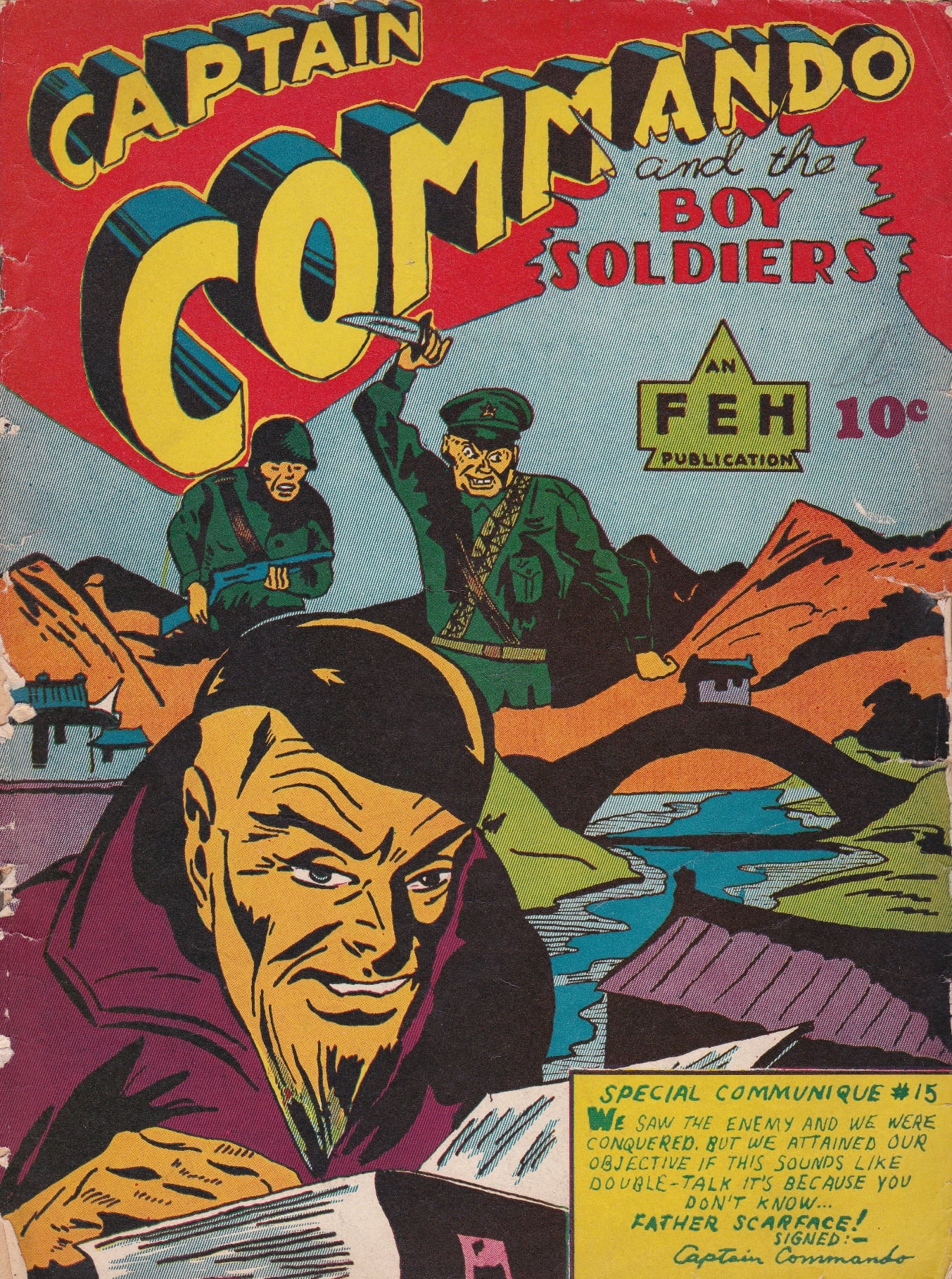
Captain Commando and the Boy Soldiers, no number, no date: Front cover.
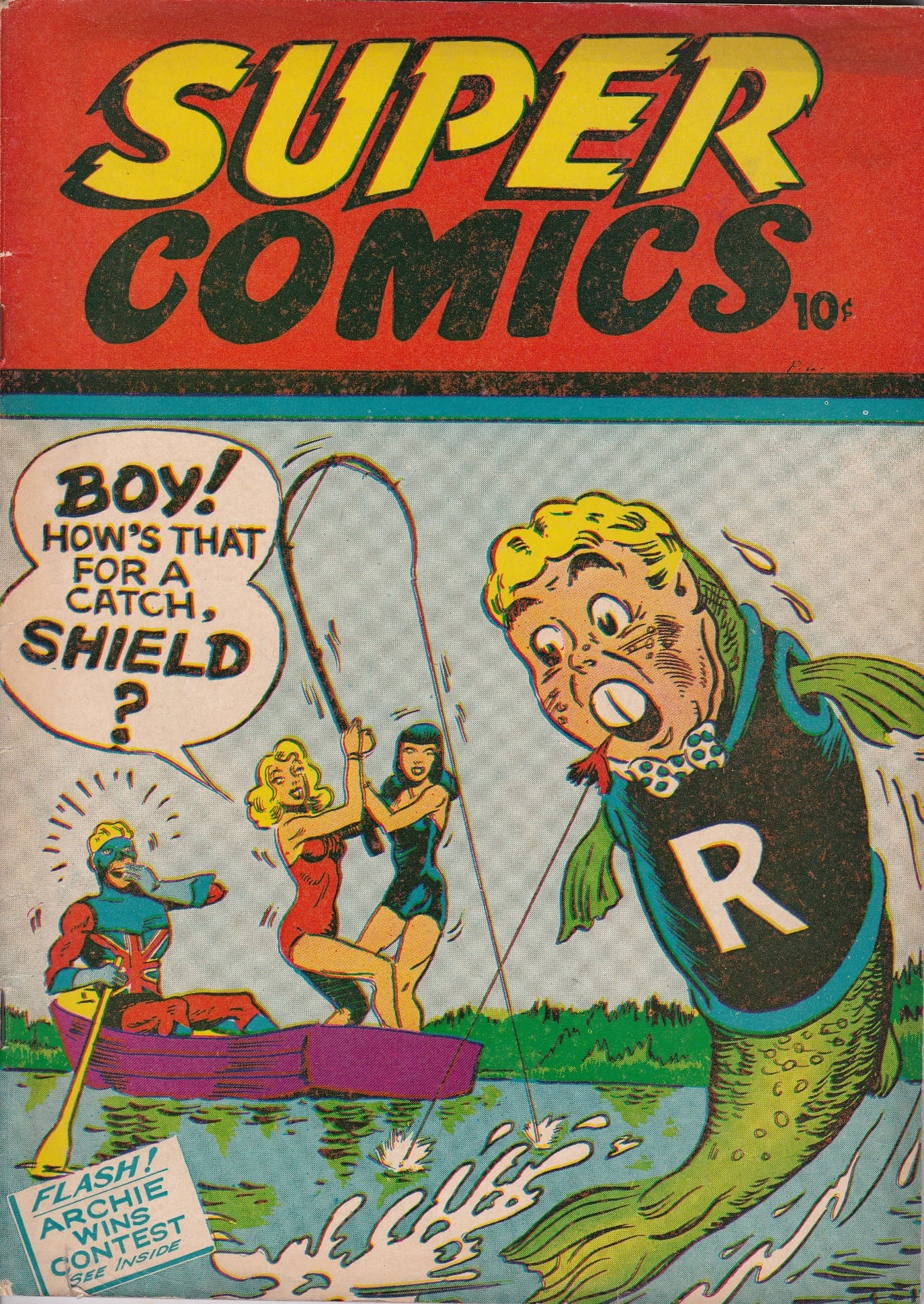
Super Comics, no number, no date: Front cover.
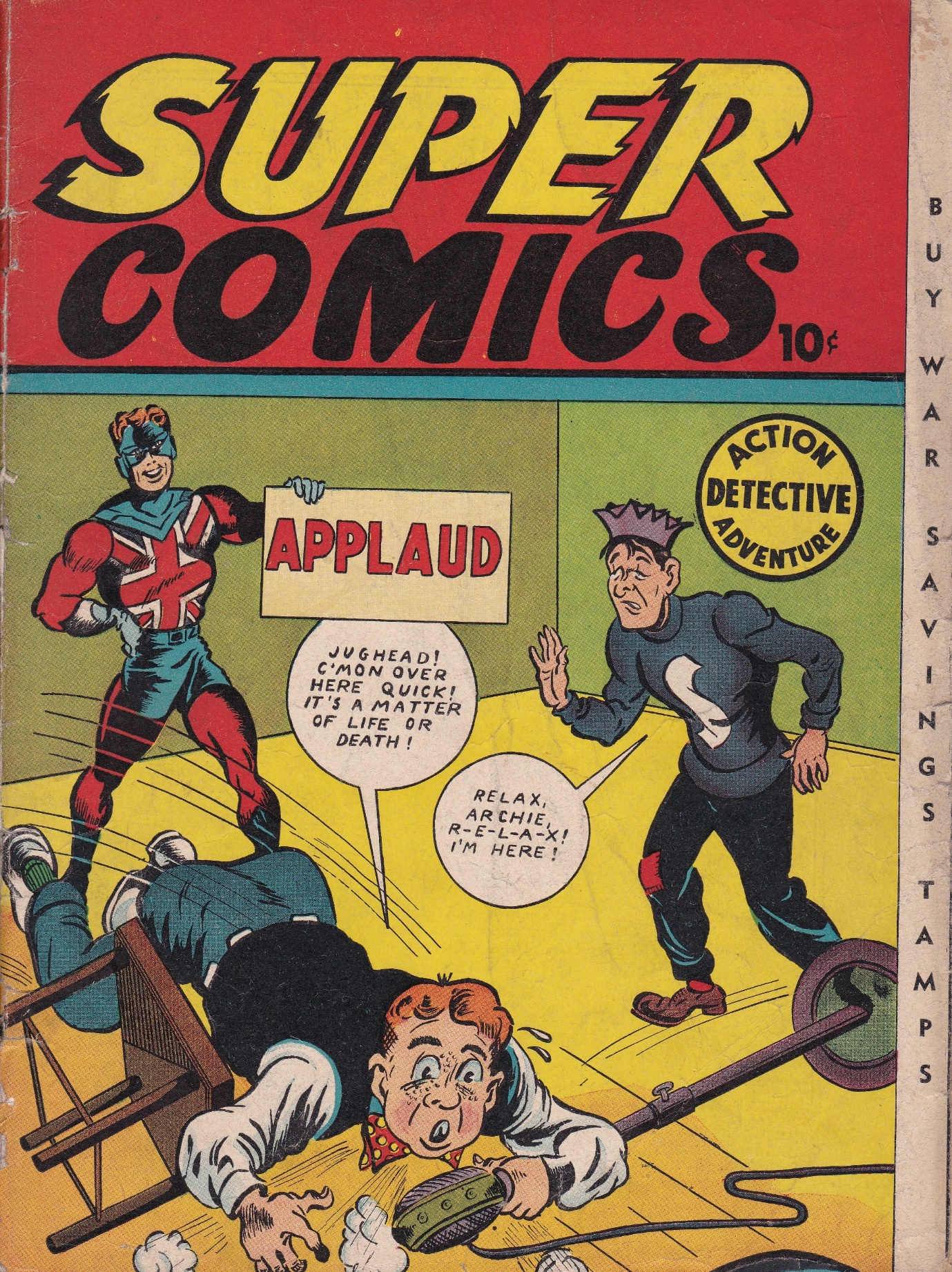
Super Comics, 2-2, 1943: Front cover.
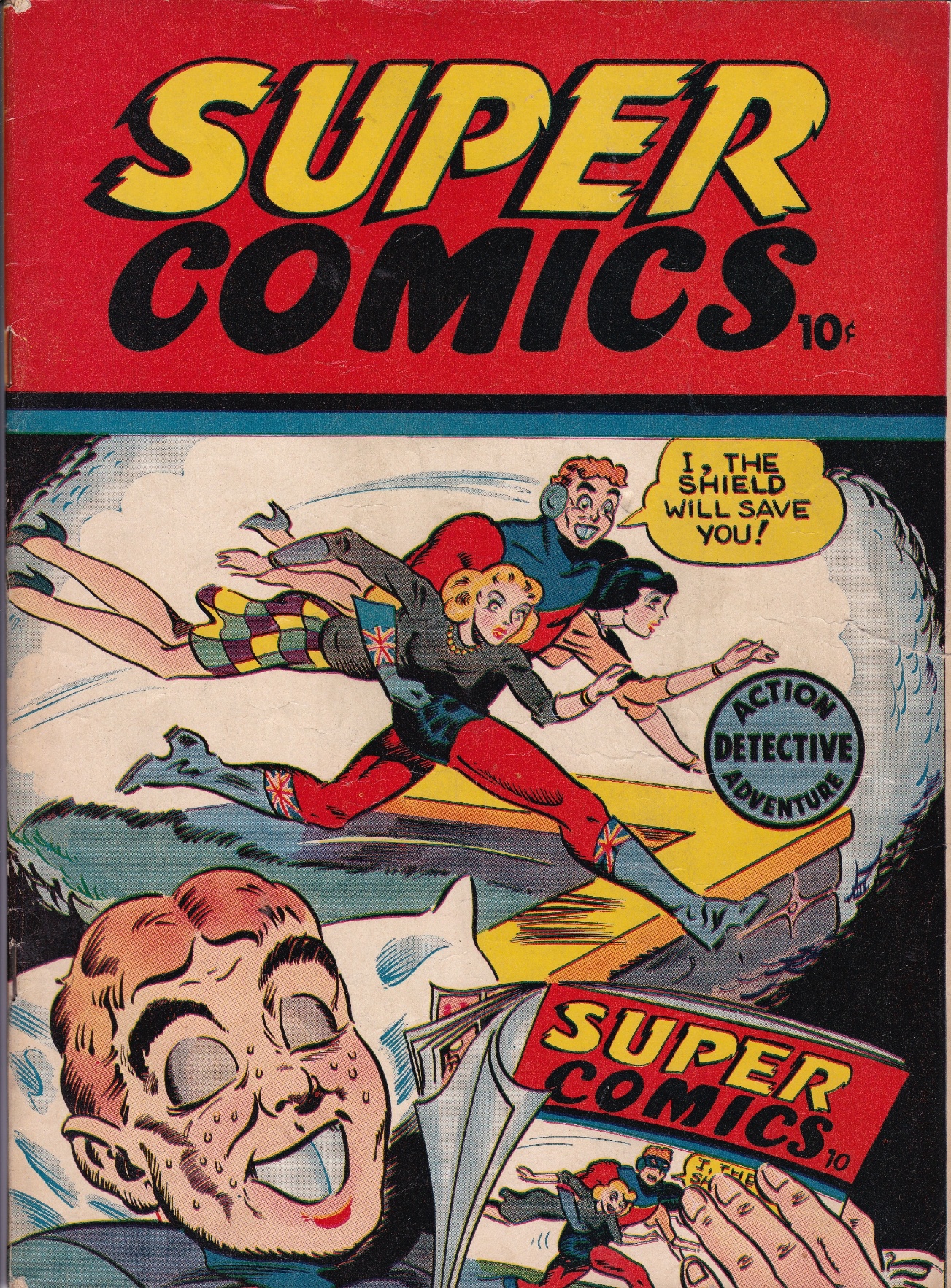
Super Comics, 2-4, 1944: Front cover.
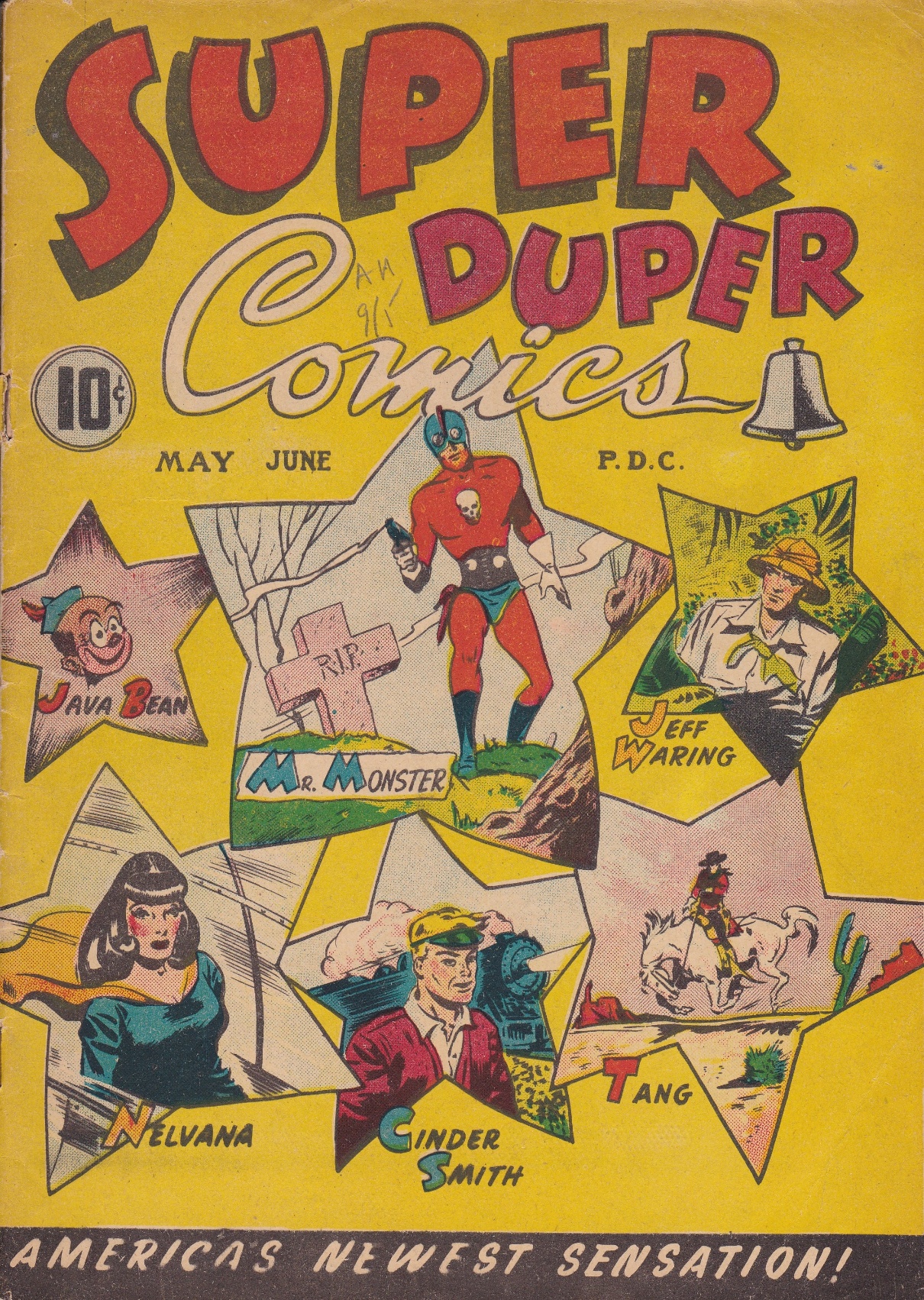
Super Duper Comics 3, May/June 1947: Front cover.