McLAREN Norman
 McLaren: 16.
“Animation is not the art of drawings that move, but the art of movements that are drawn.”
“I have tried to preserve in my relationship to the film the same closeness and intimacy that exists between a painter and his canvas.” “Norman McLaren quotes.” Brainy Quotes. Web. Accessed 10 August 2016.
Here at least is something new in the art of drawing.” Praise from Pablo Picasso after seeing McLaren’s work. McLaren: 17.
Born 11 April 1914 in Stirling Scotland.
At eighteen years he began studying art and set design at Glasgow School of Art. He graduated with a degree in Interior Design. In 1934, he joined the Glasgow Film Society, and came to think of film as an art form. He developed the exacting technique of drawing directly on film thus eliminating the expense of needing a camera.
In 1935, he entered Camera Makes Whoopee in the Glasgow Amateur Film Festival. The one man jury, John Grierson the famous British documentary film-maker, judged the film bad but seeing McLaren’s potential gave him a prize and hired him to work for London’s General Post Office film department. In 1936, he was given a leave of absence to travel to the Spanish Civil War were he acted as cameraman for director Ivor Montagu’s film of the siege of Madrid. Back at the General Post Office, under Brazilian avant-garde director Alberto Cavalcanti, McLaren made his first animated film Love On The Wing.
In October 1939, he arrived in New York as a landed immigrant. After several months he got a job producing industrial and public relations films. In his spare time he made short abstract films. He drew both the visuals and the sounds on clear 35 mm film stock. These were purchased by the then named Guggenheim Museum of Non-objective Painting.
In 1941, Grierson, who founded the National Film Board, and was appointed the first Government Film Commissioner wanted McLaren to come to Canada to work for him. McLaren told Grierson that he was in the midst of directing a film and couldn’t leave and besides he didn’t want to make hard-sell war propaganda films. Grierson assured him that he would be free to make cinema on his own terms, and through diplomatic channels pressured McLaren’s employers to release him from his commitments, shortly after McLaren was in Canada working for Grierson.
After a short stint making a succession of films using his drawing-on-film technique, of which Early Mail (1941) was the first such animated film in Canada, McLaren was assigned to establish an animation unit in late 1942. Over the next fourteen months he hired and trained future N. F. B. animators.
Returning to animation in 1944, he produced C’est l’aviron and Là-haut sur ces montagnes for the Chantes Populaires series. In 1949, McLaren with Evelyn Lambert, using Oscar Peterson’s music, created Begone Dull Care innovating the technique of painting lengthwise on film stock. Pablo Picasso saw the film and cried “Here at least is something new in the art of drawing.”
In 1949, he went to China to take part in an UNESCO project on fundamental education. He taught animation and filmstrip techniques to Chinese artists so that they could use them to teach rural populations health and sanitation. As he was teaching in the area, the Communist Army moved in and took control.
On his return to Canada, he created two 3D films, Now Is The Time and Around Is Around for the 1952 Festival of Britain. These films were an extension of his hobby of making stereoscopic drawings and paintings. The following year in 1952, he turned his attention stop motion or pixilation animation and produced Neighbours a film featuring live actors. It won an Oscar. On hearing the news he said:’ Thanks but who is Oscar?’
By this time he was in India on another UNESCO fundamental education project. While there McLaren’s health suffered and on his return to Canada it deteriorated further until he was hospitalized with severe rheumatic fever which permanently damaged his heart. However, he was able to finish Blinkity Blank, in 1955. For this film, he won the Palme d’or at Cannes.
In 1956, he and the N.F.B. staff moved to their new headquarters in Montréal. State honours, awards at various film festivals, invitations to visit film and other institutes, interviews, and his continuing poor health, cut into McLaren’s film productivity, in spite of the ways he sought ways to reduce celebrity commitments. He did, however, continue to produce a steady stream of films.
In the late 1960’s he returned to his experiments in human movement that he had begun in Neighbours and A Chairy Tale back in the 1950’s. According to Guy Glover, “His elaboration of ‘live action’ through control of camera speeds and through intricate optical printing processes was pushed far in Pas de deux (1967) and even farther in Narcissus ….”
In 1975, he received the Anni Award of the International Animated Film Society
He died of a heart attack, 27 January 1987 in Montréal. By that time he had produced 59 films and won about 200 international awards. Three close collaborators with many of these films were composer Maurice Blackburn and animators Grant Munroe and especially Evelyn Lambart all of whom developed distinct careers of their own.
“For all but two of his 45 years as a professional filmmaker, Norman McLaren ha[d] remained as a civil servant. John Grierson’s 1941 offer on behalf of the Government of Canada – ‘Come and you will see that you can make cinema as you understand it’ – turned out to be as much a prophesy as a well-kept promise.” (Glover)
In 2018, Frame By Frame a ballet based on the life and work of Norman McLaren was created by Robert Lepage playwright, director, actor and filmmaker and Guillaume Côté, , choreographer, musician, composer and principal dancer and Choreographic Associate of the National Ballet of Canada. It was a collaboration between the National Ballet of Canada, Ex-Machiuna Lepage’s multidisciplinary production company and the National Film Board. It ran June 1-10, 2018.
WORK:
ANIMATOR:
FILM:
Scotland:
Untitled, 1933, 3 min., hand painted abstraction on clear film.
Seven Till Five, 1933, 10 min., live action, won 1st Prize in the 2nd Amateur Film Festival in Glasgow (1934).
Camera Makes Whoopee, 1935, 15 min., mixed techniques: animation, live action optical effects.
Polychrome Fantasy, 1935, 2 min., special effects.
Five Untitled Shorts, 1935, 5 min., each, McLaren’s first commissioned work.
Colour Cocktail, 1935, 5 min.,mixed techniques, instrumental in McLaren getting his first professional job.
Hell Unlimited, 1936, 15 min., anti-war film, mixed techniques: puppets, diagrams, animation, live action.
London, England:
Book Bargain, 1937, 10 min., documentary on production of the London telephone directory.
News for the Navy, 1937-38. 10 min., how a letter from home reaches a sailor on duty in foreign waters.
Mony a Pickle, 1937-38, 10 min., produced by several director. McLaren’s 2 minute sequence combined live photography and animation.
Love on the Wing, 1938, 5 min., 30 sec., continually metamorphosing symbols drawn directly on 35mm film stock.
The Obedient Flame, 1939, 20 min., a film using live action and animation.
New York, U.S.A.:
NBC Greeting, 1939, 30 sec., drawn directly on 35mm film, and set to “stock” music.
Allegro, 1939, 2 min., abstract visual and sound elements drawn and printed directly on clear 35 mm film.
Stars & Stripes, 1940, 2 min., 53 sec., a fantasia on the U.S.A. flag using Sousa’s music of the same title.
Dots, 1940, 2 min., 23 sec., abstract visuals and sounds both drawn in india ink on 35mm film. Awards, Rome and Toronto.
Loops, 1940, 2 min., 43 sec., abstract visuals and sound track both drawn in india ink on 35mm film. Awards, Rome, Salerno, Toronto.
Boogle Doodle, 1940, 3 min., 23 sec., hot jazz boogie played by pianist Albert Ammons with semi abstract visuals drawn directly on 35mm film.
National Film Board, Ottawa:
Mail Early, 1941, 2 min., publicity clip for Canada Post. Non abstract symbols drawn on clear 35mm film, superimposed on photographed painted background with sound provided by Benny Goodman’s “Jingle Bells”.
V for Victory, 1941, 2 min., matchstick figure symbols and lettering drawn on clear 35mm film to synchronize with bass band rendition of Sousa’s march “The Thunderer”.
Five for Four, 1942, 4 min., wartime Savings promotion. Symbolic figures drawn directly on 35mm film move and dance against simple painted background. Music “Pinetop Boogie” by Albert Ammons.
Hen Hop, 1942, 3 min., 17 sec., victory Bond promotion, A visual interpretation of Canadian barn dance music, drawn directly on 35mm film with colour added later. Award, Brussels.
Dollar Dance, 1943, 5 min., 30 sec., publicity trailer for wartime inflation and price controls. Direct drawing on 35mm film. Sound track consists of rhymed verses spoken to an orchestral accompaniment composed by Louis Applebaum.
Alouette, 1944, 3 min., co-animated with René Jodoin. Single frame animation of paper cutouts was used. This was number 1 of a sing-along series “Let’s All Sing Together”.
Keep Your Mouth Shut, 1944, 3 min. wartime anti-gossip promotion. A human skull is animated to speak an ironic message.
C’est l’aviron, 1944, 3 min., white gouche drawings on black card photographed with overlapping zooms to suggest forward movement of a canoe. Part of “Chants populaires” series.
Là-haut sur ces montages, 1945, 3 min., monochrome pastel drawings metamorphosed under an Animation camera. Also part of “Chants populaires” series.
A Little Phantasy on a 19th Century Painting, 1946, 3 min., 37 sec., variations on Arnold Boecklin’s painting “Isle of the Dead. Monochrome pastel addition technique was used to introduce transformations of Boecklin’s spectral images. Award, Salerno.
Hoppity Pop, 1946, 3 min., 17 sec., linear configurations drawn directly on 35mm film and animated frame by frame to synchronize with circus calliope music.
Fiddle-de-dee, 1947, 3 min., 22 sec., drawn, painted and scratched on 35mm film to mimic the music of Gatineau valley fiddler Eugène Desormaux. Five awards including Brussels and Rome.
La Poulette grise, 1947, 5 min., 32 sec., coloured pastel drawings illustrating phrases of a French lullaby Metamorphose in a continuous chain of mixes made in the camera. Melody sung by Anna Malenfant of Montréal.
A Phantasy, 1948, 1953, 7 min., 15 sec., began in 1948 as “Chalk River Ballet” redesigned and completed in 1953. Painted cutouts were animated and superimposed on metamorphosing coloured paste. Backgrounds. Music both live and animated composed by Maurice Blackburn. Awards, Boston, Toronto, Venice.
Begone Dull Care, 1949, 7 min., 48 sec., an interpretation by Norman McLaren and Evelyn Lambart of three contrasting jazz pieces composed by Oscar Peterson and played by the Oscar Peterson Trio. Seven awards including Berlin, Venice.
Now Is The Time, 1950-1951, 3 min., one of two 3-D film commissioned by the British Film Institute for the Festival of Britain. Stereoscopy was achieved by photographing and drawing two visuals, one for each eye. The hand drawn sound was composed and drawn on two separate bands for stereoscopic playing.
Around Is Around, 1950-1951, 10 min., the second 3-D film produced for the Festival of Britain. Music by Louis Applebaum.
Neighbours, 1952, 8 min., 10 sec., techniques used to animate drawings or puppets were used to animate live actors. It is sometimes called pixilation. Sound also animated. Story of two neighbours who kill each other and their families over desire to possess a flower. Eight awards including Hollywood, Oscar, Rome.
Two Bagatelles, 1952, 2 min., 22 sec., two studies using pixilation. “On the Lawn” actor Munroe does a pixilated waltz to McLaren’s synthetic music. “In the Backyard” is a fast march to a calliope.
Blinkity Blank, 1955, 5 min., 15 sec., an experiment that made use of intermittent animation and spasmodic imagery to play with persistent of vision and after vision in the retina of the eye. The visuals were engraved and coloured on black 35mm film. The music was by Maurice Blackburn. Twelve awards including, Berlin, British Film Academy, Cannes, Edinburgh.
National Film Board Montréal:
Rythmetic, 1956, 8 min., 35 sec., co-produced by McLaren and Evelyn Lambert the animated exploration of the simple rules of arithmetic uses white paper cutouts on a black background. McLaren engraved the sound directly on the film. Ten awards including British Film Academy, Edinburgh.
A Chairy Tale, 1957, 9 min., 30 sec., Live action conflict between chair and McLaren employing some pixilation. Ravi Shankar Indian sitar player composed music for film. Six awards including British Film Academy.
Le Merle, 1958, 4 min., 7 sec., Single frame animation of white cutouts optically superimposed on coloured backgrounds. A stylized bird dances to a Francophone Canadian nonsense folk song. Five awards including Brussels, Locarno, New York.
Short and Suite, 1959, 4 min., 47 sec., scratched, engraved, and drawn shapes translate the jazz music. Written for the Eldon Rathburn emsemble. Awards, Bergamo, Venice.
Serenal, 1959, 4 min., engraved a strip of 16 opaque mm film with patterns that mirror the rhythms of a west Indian steel band. Awards, Bergamo, Bilbao, San Sebastion.
Mail Early For Christmas, 1959, 40 sec., engraved on black film. Music by Eldon Rathburn.
Jack Parr Credit Titles, 1959, 30 sec., Sound animated by McLaren.
Lines Vertical, 1960, 5 min., 50 sec., co-animated with Evelyn Lambert. Engraved lines vertical on black 35 mm film. Background colour added optically. Music composed and played by Maurice Blackburn. Awards Edinburgh, Venice.
Opening Speech, 1960, 6 min., 33 sec., made for opening of the 1961 Montreal International Film Festival, it animates both objects and actor (McLaren). Award, London.
New York Lightboard, 1961, 8 min., Tourism publicity clip projected in Times Square, New York, on a large sign board composed of thousands of light bulbs activated by film images. Paper cutouts were used for single frame animation of linear symbols.
New York Lightboard Record, 1961, 8 min., a film recording the reaction of New Yorkers watching the New York Lightboard clip.
Lines Horizontal, 1961, 5 min., 58 sec., each frame of Lines Vertical was turned on its side by special optical process and colour was added by filters in an optical printer. Music by Pete Seeger.
Canon, 1964, 9 min., 13 sec., a visual and musical demonstration of the canon, a type of music. Included live action photography of actor Grant Munroe. Five awards, including Canadian Film Award, Melbourne.
Mosaic, 1965, 5 min., 27 sec., Lines Vertical and Lines Horizontal were combined to create patterns of small squares which became Mosaic. The rhythmic sound track was produced by single frame engraving on black film stock. Awards, Buenos Aires, Melbourne, New York, Vancouver.
Pas de deux, 1967, 13 min., 22 sec., special effects filming of two dancers. Sixteen awards including American Film Festival, British Film Award, Canadian Film Award.
Spheres, 1969, 7 min., 28 sec., Single-frame animation of cutout spheres superimposed on coloured backgrounds create an abstract complex dance. Award Argentina.
Synchromy, 1971, 7 min., 27 sec., an animated sound composition. “What you see is what you hear.” Eight awards including Barcelona, Melbourne, San Francisco.
Ballet Adagio, 1972, 9 min., 59 sec., slow motion conventional film photography recorded a pas de deux danced by Anna Marie and David Holmes. Designed to reveal the technique and mechanics of adagio movements. Awards Atlanta, Columbus, Melbourne.
Pinscreen, 1973, 38 min, 44 sec., documentary film showing the installation of the latest model of Alexeieff’s pin-screen purchased by N.F.B.
Animated Motion Parts 1 to 5, 1976 to 1978, each ranging from 7 to 10 min., a series of five study films In which McLaren comments on, demonstrates, and classifies aspects of motion which the animator employs in his work. Award, Athens.
Narissus, 1981, a film ballet retelling the ancient Greek legend.
MERCHANDISE:
DVD:
Norman McLaren: Selected Films. National Film Board of Canada, 2002.
ILLUSTRATOR:
BOOK GRAPHIC COLLECTION:
Content drawings & Cover dust jacket front & back:
The drawings/les dessins de Norman McLaren. Introduction by Norman McLaren. Tundra Books, 1975.
AWARD:
Oscar,
1952: Neighbours, 8 min., 10 sec.
SOURCE:
Book:
The Film Work of Norman McLaren. Writ., Terence Dobson. John Libbey Publishing, 2006.
McLaren. Writ., Guy Glover. National Film Board of Canada. no date.
Norman McLaren: Manipulator of Movement, The National Film Board Years 1947 – 1967. Writ., T. Richard Valliere. Associated University Presses Inc., 1982..
Article book:
The drawings/les dessins de Norman McLaren. Tundra Books, 1975: “Biography, Filmography, Awards”: 183-191..
Take One’s Essential Guide to Canadian Film. Ed., Wyndham Lewis. University of Toronto Press, 2001: “McLaren, Norman: 142.
a handbook of Canadian film. Writ., Eleanor Beattie. Peter Martin Associates Ltd/Take One, 1973: “Norman McLaren”: 169-172.
Article periodical:
Maclean’s, 9 Feb. 1987: “A pioneer of animation.” Writ., Pamela Young: 50.
Shift, July 1997: “The Great Animation Conspiracy”: 42.
Tamarack Review, Autumn 1957: “Norman McLaren.” Writ., Germaine Warkentin: 42-53..
Advertisement newspaper:
Globe & Mail, 26 May 2018: “Frame By Frame: R5.
Globe & Mail, 2 June 2018: “Frame By Frame:, R2, R5.
Article newspaper:
The Spectator [Hamilton], 20 Sept. 1986: “Weekend Now: An Animation Primer”. Writ., W. Hemsworth: C1.
DVD:
Norman McLaren: Creative Process. Dir. Donald McWilliams. National Film Board of Canada, 2002.
GALLERY:
 From dust jacket of The drawings/les dessins de Norman McLaren. 1975.
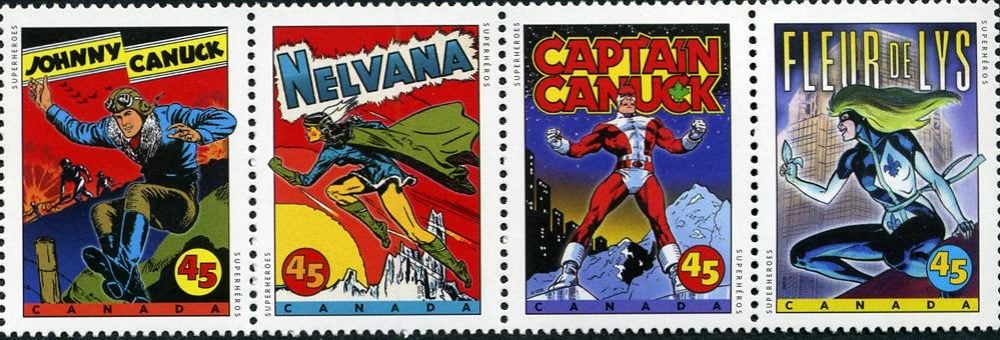
 Left to right: Jean McMaster, Luke Bradley, Nancy Collins, Ron Leonard, Northern Secondary High School, circa 1941.
 Rose Hips from a greeting card created by Jean McMaster 2006.
 Captain Marvel Comics, 2-5, May 1943, Front cover.
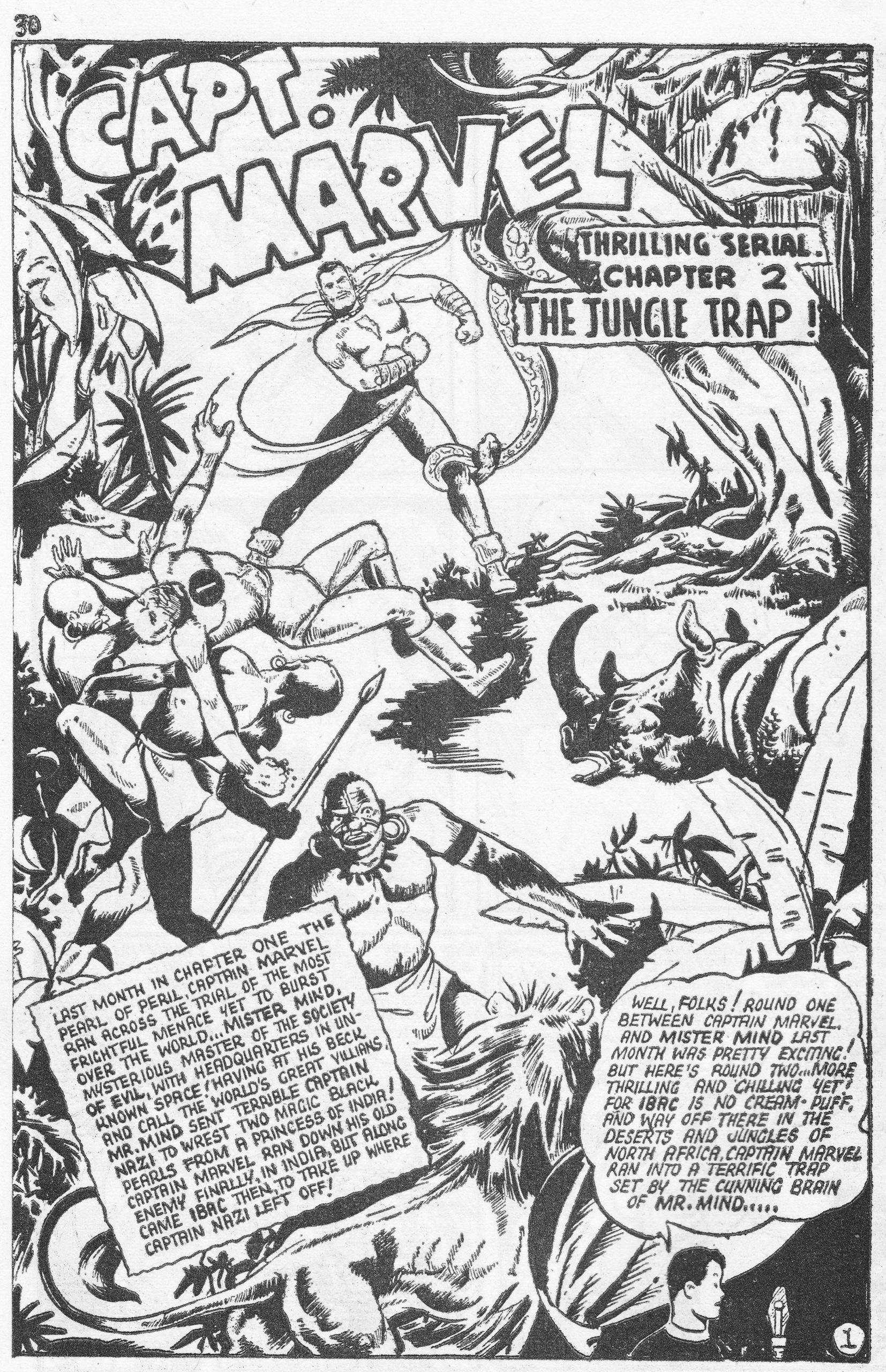 Captain Marvel Comics, 2-9, Sept. 1943: 30
 Captain Marvel Comics, Aug. 1943: 50 Captain Marvel Comics, Sept. 1943: 35
 This watercolour by Jean McMaster was done while she was visiting Betty Mercer (Atkinson). The window was in the bedroom of Mary J. Atkinson (Neill) the daughter of Betty.
 Portfoolio 19: 155.
 Kill Shakespeare: v. 1, A Sea of Troubles. 2010.
 Kill Shakespeare: v. 2, The Blast of War. 2011
 Kill Shakespeare, 4. Aug. 2010: Front cover.
 Photo by Yousf Karsh, Let’s All Hate Toronto, Oct. 1956: Dust jacket.
 Goblin, IV-9, March 1924: 17.
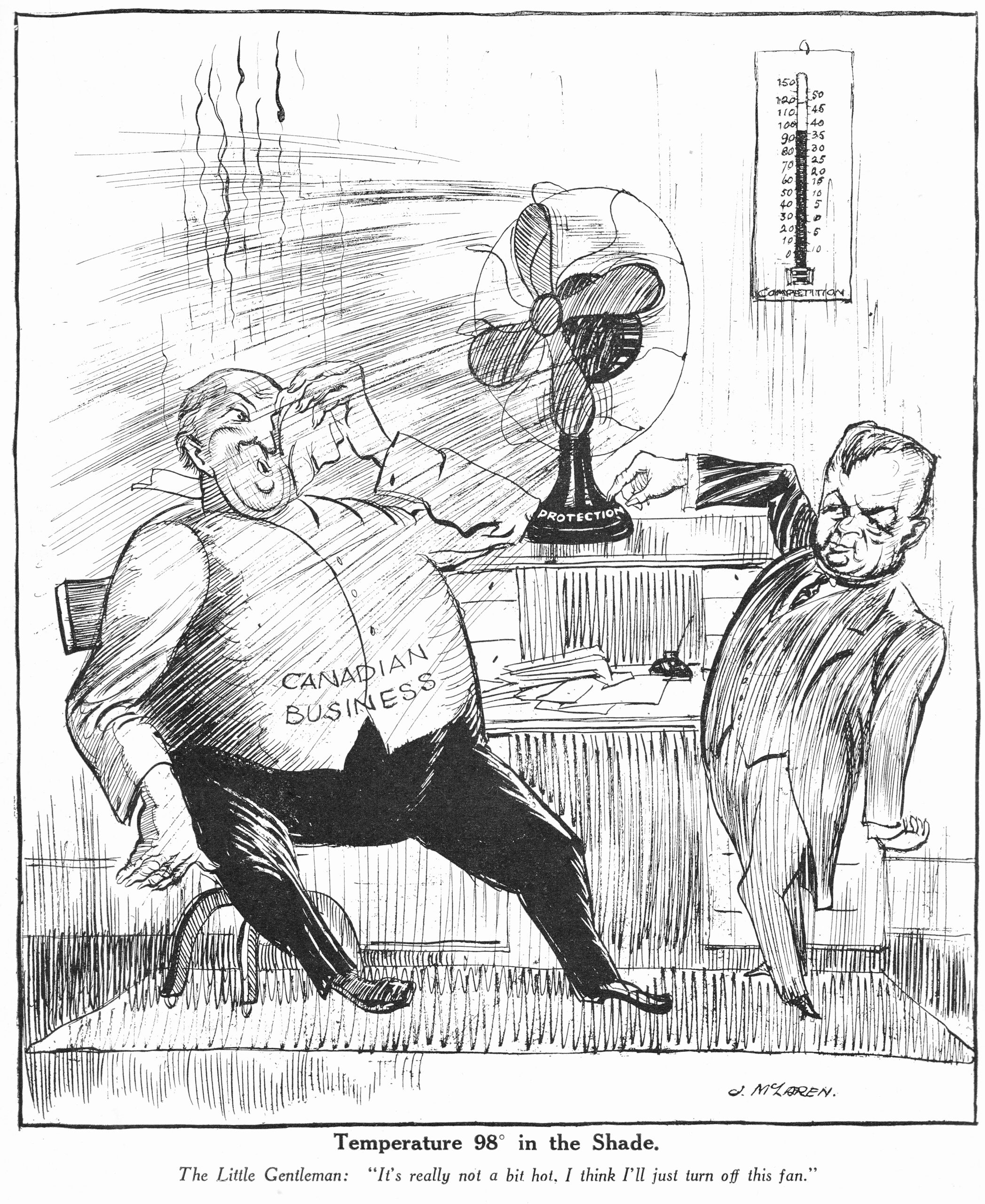 Goblin, V-1, July 1924: 19.
 Let’s All Hate Toronto. Kingswood House, Oct. 1956. Dust jacket.
 Taddle Creek, VIII-2, Summer 2005. “Fad to Gray”: 24