GOVERNMENT WAR EXCHANGE CONSERVATION ACT
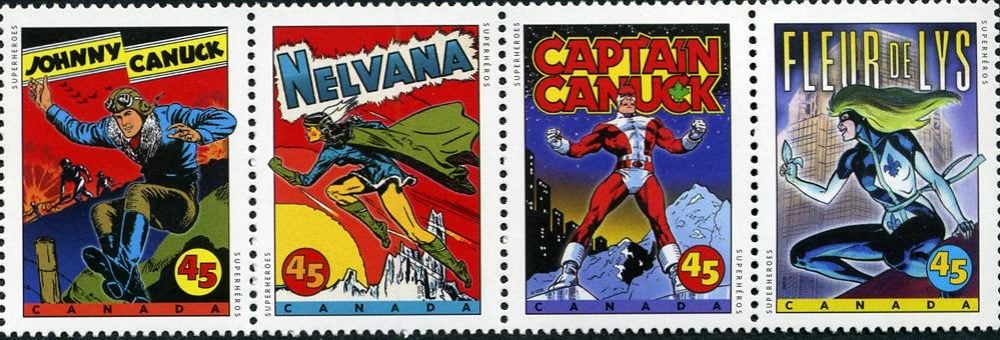
As World War 2 raged Canada imported immense quantities of military equipment from the U.S. which was neutral at the time to supply its forces: the Canadian army in the defense of Britain and Hong Kong, the R.C.A.F. engaged with the R.A.F in the Battle of Britain and the RCN with the R.N. engaged in the Battle of the Atlantic. In order to conserve its currency for the importation of these materials Canada on December 2, 1940, enacted the War Exchange Conservation Act assented December 6, 1940 which restricted the importation of nonessential goods from other countries. This included luxury goods, broad range of prepared food items and of course:
“Periodical publications unbound or paper bound, consisting largely of fiction or printed matter of similar character, including detective, sex, western and alleged true or confession stories, and publications unbound or paper bound, commonly known as comics but not including bona fide supplements used with newspapers.”
A small, undercapitalized industry was created by Canadian artists and entrepreneurs to fill the void left by the absence of the U.S. product. They reacted in different ways. Some organized companies like Bell Features, Educational Projects, Hillborough Studio and Maple Leaf Publishing to publish original material. Others like F.E. Howard Publications imported scripts from U.S. companies and employed local artists to draw them. Anglo-American Publishing Ltd. was a hybrid. To the original material it published, it added scripts from the U.S. for which its artists drew the visuals.
With the end of the war Canada phased out the Act over a period lasting to 1951. It created a crisis for the Canadian industry eliminating first those companies which produced original material. Companies now able to publish finished material originating in the U.S. survived till the mid 1950’s, but they vanished as major U.S. producers were able to get their product directly to the Canadian market through major Canadian periodical distributers. At least one company, Ganes Productions Ltd. found a niche for itself publishing cartoon information booklets for companies and institutions. It existed from at least 1962 to 1973. It was not till the emergence of the black and white graphic periodical and book that a grassroots graphic publishing industry reappeared in Canada.
SOURCE:
Statutes of Canada 1940-1941: Acts of Parliament of the Dominion of Canada 19th Parliament: 4-5 George VI, Chap. 2, An Act respecting the Conservation of Exchange, Assented 6th December 1940.