EASTER FEVER

EASTER FEVER/THE JACK RABBIT STORY

This ,Nelvana’s fifth half-hour special, appeared on Canadian Broadcasting Corp. television Sunday 30 March 1980. Both Patrick Loubert and Michael Hirsh are named Producers. Clive Smith’s role is confusing, sometimes named Producer, he does not appear in the credits. It is likely he was already working on what would become Rock and Rule. According to Starweek, planning for Rock and Rule was already underway when this project was being finalized. A partner production company was Topcraft a Japanese animation company. The film was a Canadian/American production: The Directors were John Celestri an American animator and cartoonist, Greg Duffell of Toronto an animator, producer and writer who owned Lightbox Studios Inc. and Ken Stephenson. The screenwriter was American Larry Moulin. Songs were by John Sebastian. The music was composed by Patrician Cullen, another Nelvana regular. The voice actors included Nelvana regulars Catherine O’Hare and Chris Wiggins. Don Fergusson of the comedy team Royal Canadian Air Farce also participated.

Unlike the previous specials, Easter Fever has no continuous storyline. Rather it is three episodes within the framework of a celebrity roast modelled on the television series Comedy Central Roasts (1998-2002) in which among insults and jokes the celebrity’s life and career were revealed by his or her peers. The Easter element fades with each episode until it disappears altogether. The alternate title “The Jack Rabbit Story” would have better reflected the creators’ intent.

The “roast” has been organized because “Jack, The Easter Rabbit” is going to retire. The show starts with a catchy number “Easter’s been good to me” sung by “Jack”. The first celebrity “Santa Claus” who “Jack” idolizes relates “Jack’s” origin story. It began when he and other rabbits were attacked by farmers for eating their crops. He was rescued and raised by a hen. His childhood was in the “Rudolph Reindeer” mode. He was an outsider who didn’t fit in with the chickens and who was mocked by the other farm animals. One Christmas his chicken “parents” who were poor painted an egg and put it in a stocking for him. It fell out and became lost, but “Jack” searched and found it. He remembered this event when during the Easter holiday the farm animals complained about having nothing to do. Thus was born “Jack The Easter Bunny” who hid painted eggs for others to search out and find. “Santa” ends the story calling Easter the second most important holiday which “Jack” jokingly disputes.

The second celebrity “Ratso” tells how “Jack” and “Scarlett O’Hare” became a couple. “Jack” was training for Easter Day when he saw “Scarlet” and fell so hopelessly in love with her that he was incapacitated. The farm animals organized a contest for a replacement and “Scarlet” accidently won much to “Ratso’s” displeasure. “Ratso” had always envied “Jack” and wanted to take over the Easter egg delivery himself. He organized a gang of rat toughs, and they harassed “Scarlet”. “Jack” raced to the rescue, but it is uncertain who saved who. “Ratso” ends his account when he says to “Jack” “no hard feelings” but it is questionable if he no longer envies “Jack”

The third celebrity is “Scrawny Chicken” and she tells how she and the other hens and their eggs were rescued from the mad chef “Madam Melegg” who had kidnapped them and was forcing them to lay two million eggs. The main event is “Jack’s” battle with “Madam Melegg”. References to Easter have disappeared.

Concerning the “roast” framework, it is difficult to say whether Nelvana is indulging in its tradition of social comment or whether the creators are simply copying the atmosphere they saw in the Comedy Central Roasts”. The characters seem superficial, their behaviors more theatrical than real. A rivalry beneath the surface of camaraderie is hinted at in the “Santa” episode and made explicit in the “Ratso” episode. The only genuine character is the young aardvark who throughout the film attempts to reach “Jack”. At the end of the roast, he succeeds and presents “Jack” with an Easter Egg begging him to stay on as the “Easter Bunny” which, of course, “Jack” agrees to do.

As in other Nelvana productions, film reviewers identify the quality of the animation as the strength of the film. To quote Jeremy Ferguson:

“What makes this nonsense worth watching is the quality of the animation in a medium    were quality has long been sacrificed in pursuit of the fast buck.”

SOURCE:

Article periodical:

The Spectator [Hamilton] TV Times, 25 March – 5 April 1980: “The Easter Bunny is a cluck”. Writ., Wesley Hicks: no page number, cover.

Starweek Magazine, 25 March – 5 April 1980: “Nelvana’s Easter Egg”. Writ., Jeremy Ferguson: 6.

Newspaper:

Toronto Sun, 2 October 1979: Nelvana’s ‘Thanksgiving’ is Out Of This World”. Writ., George Anthony.

Internet:

https://www.imdb.com/title/tt0382006/fullcredits. Accessed 29 April 2024.

GALLERY:

A cartoon of a person and a rabbit Description automatically generatedThe Spectator [Hamilton] TV Times, 25 March – 5 April 1980: No page number.

Cartoon of a rabbit holding an egg Description automatically generated                                                Starweek Magazine, 25 March – 5 April 1980: 6.
ROMIE-0 & JULIE-8

ROMIE-0 AND JULIE-8

Premiered on CBC 14 April 1979, this half hour animated special was the third effort of Nelvana team: Hirsh, Loubert and Clive.

Essentially, it is Shakespeare’s Romeo and Juliet given futuristic characters and setting. The star-crossed lovers are now two robots, Romie-0 and Julie-8. The Montague and Capulet families are transformed into rival computer corporations, Mega Stella Company which has just released Romie-0 and Super Solar Cybernetics who are the creators of Julie-8. Where in the Shakespeare play, the lovers meet when Romeo and friend crash a celebratory feast given by the Capulets, Romie-0 and Julie-8 meet a giant tech convention where they have been unveiled. Like Romeo and Juliet, our two robots upon seeing each other instantly fall in love, this to the chagrin of the two corporate owners Mr. Thunderbottom and Ms. Fassbinder, After the balcony scene common to both the play and this production, the two lovers run away. Enter the character Gizmo filling the role of the benevolent Friar Laurence in Shakespeare’s play, but a sleazy character with an agenda of his own in this production. He helps them escape to Trash-o-lot, a planet turned into a garbage dump, where they encounter the Junk monster Sparepartski who banishes Romie-0 to the other side of the planet and imprisons Julie-8. Almost immediately Romie-0 escapes and is making his way back to Julie-8 while Gizmo reappears and convinces Julie-8 to consent to marry Sparepartski to gain Romie-0’s freedom. She consents to this but as in Shakespeare’s play where Juliet when faced with a forced marriage takes a potion that puts her into a coma simulating death, Julie-8 in effect commits suicide by removing from herself a necessary circuit. However, Romie-0 finds her restores her circuit and they begin their escape. Running parallel to this action Thunderbottom and Fassbinder if not resolving their bickering, have at least joined forces searching for their missing robots. They arrive at Trash-O-Lot only to be captured and imprisoned by Sparepartski. Romie-0 and Julie-8 during their flight encounter and free them and all four flee from Sparepartski who has been left standing at the alter. At one point the lovers carry their creators who are too exhausted to run further. At another point their creators carry them to safety out of a rust storm that immobilized them. Fortunately, the rust storm also destroys Sparepartski. The two corporate owners have fallen in love. They reconcile their differences much like the Montagues and Capulets in Shakespeare’s play. The difference being the lovers in Romie-0 and Julie-8 live the see the reconciliation.

In a final scene, Gizmo reappears and confesses that Sparepartski was his creation and that Gizmo was using him to gain Julie-8 for himself. He now whines that he is all alone. Romie-0 and Julie-8 convince that he can create his own sweetheart from the trash on the planet. Perhaps a plug for recycling. The story ends.

Globe & Mail critic Donn Downey complained the production contained too many ideas to be successful. The production does have a rushed feel to it, but this shouldn’t be surprising when the adapters are trying to compress a two plus hour drama into net twenty-four minutes. It could have easily been twice the length and still kept the audience engrossed. Furthermore, John Sebastian’s songs pause the plot’s action when it needs all the time it can get. In addition, the need for a happy ending makes the reconciliation between the two owners feel abrupt and not quite believable. Still if not great animation it is entertaining.

SOURCE:

Article book:

The Rough Guide To Shakespeare. Writ., Andrew Dickson. “Romeo and Juliet”: 325-334.

Article newspaper:

Globe & Mail, 7 April 1979: “Cartoon Romeo flirts with too many ideas”. Writ., Donn Downey.

Internet:

https://en. Wikipedia.org/wiki/Romie-0-and-Julie-8

GALLERY:

A cartoon of two people
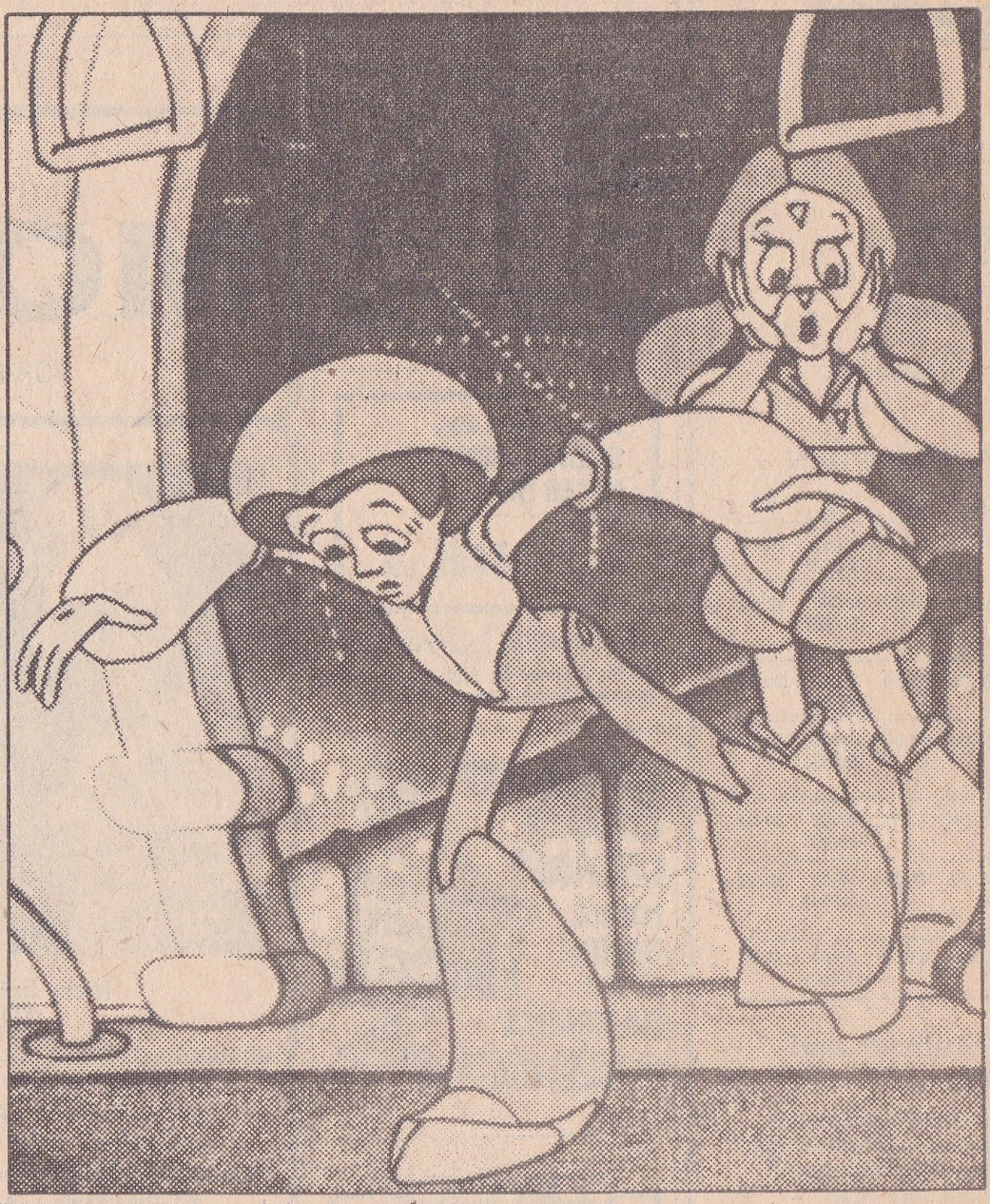
Description automatically generatedGlobe & Mail, 7 April 1979.


MTM COLLEGE

MTM COLLEGE

Current location (2024): 95 Moatfield Drive, North York (Toronto)

Founders: Maxine Schacker & Tina Sleeman

Medium shot of women smiling Description automatically generatedLeft to Right, Maxine Schacker & Tina Seemann, Toronto Star, 24 May 1998: D6.          Photo by Andrew Stawick.

It all began in September 1996, when Maxine Schacker, an animator and former Sheridan College instructor with another artist rented space for a studio. Six months later the partner moved out leaving Maxine facing eviction. Maxine persuaded the landlord to waive three month’s rent while she organized the addition of a school. It was at this time that Tina Seemann, another animator entered the scene. She provided the idea behind the mascot and the name “Max The Mutt” when she mentioned that they were a bunch of mutts not high priced purebreds like more established schools.

The college officially opened its doors September1997 as Studio M. It was an animation college and production facility with Maxine as President and Director and Tina, a Director. Initially, there were thirty students and eight-week sessions but within nine months Studio M had expanded to 200 students with a faculty of sixteen, offering year-round three-month sessions in acting, life drawing, anatomy, story boarding object drawing, layout and animation at both elementary and advanced levels. At that time, the students worked on a professional feature produced by the studio titled The Jazz Bears Jamboree. Written by Maxine’s husband David, it portrayed jazz greats of the past as animal cartoon characters. Music was composed by Michael Moore, who had also written a song about Dieppe called “6000 Soldiers”. It is not clear if this project reached a commercial audience.

The organization expanded and went through several name changes, from Studio M to Max The Mutt Animation, Art and Design to Metro Toronto Media College now called MTM College of Animation Art and Design. It apparently evolved from a combination school/production facility to purely a school. On February 28, 2022, MTM College was acquired by the Farvision Education Group Inc. also of Toronto. It presently (2024) offers four-year courses in classical and computer animation, illustration and story-telling for the sequential arts and concept art for animation and video games.

SOURCE:

Article newspaper:

Toronto Star, 24 May 1998: “Bachelor of ‘Toons”. Writ., Barry Brown: D6.

Internet:

mtmcollege.ca  Accessed 10 June 2024.

http://en.wikipedia.org/wiki/Max-the-Mutt-College-of animation-Art-%26-Design. 29 May 2024. Accessed 10 June 2024.

GALLERY:

A cartoon dog sitting in a chair Description automatically generatedToronto Star, 24 May 1998: D6.


STUDIO M

STUDIO M

See MTM COLLEGE