TREMBLAY Rick Often uses the pseudonym “Rick Trembles”.
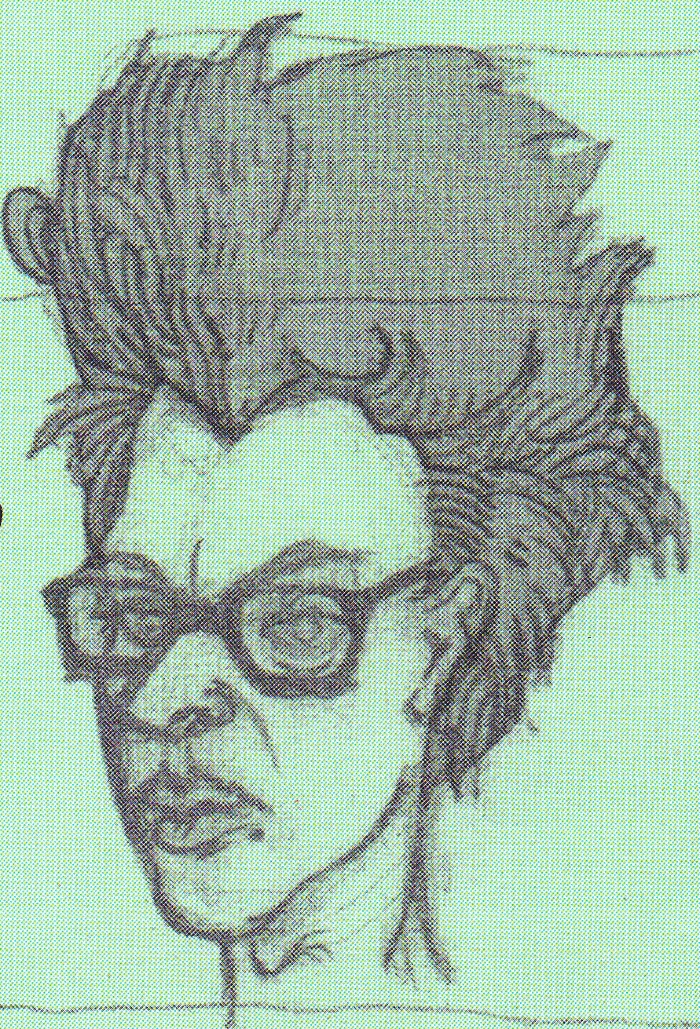 Self Portrait Mid-nineties, Represented Immobilized, 2021: Back cover.
Born 1961 and raised in St Lambert Quebec, Rick is a Montréal based cartoonist, writer, illustrator, film maker and musician immersed in Montréal’s alternative subculture scene. Robin Fisher has described him as follows: “Rick Trembles has written and drawn some excruciatingly honest comics in the last 30 years. He’s constantly putting himself out there, warts and all, in every medium he can penetrate, making him a very unusual entity in the comics world.”
Yet, he seems better described as an embodiment of the Montréal counter/punk/grunge subculture than simply a cartoonist. Rick has no formal art training. His father Jack Tremblay a prominent cartoonist and illustrator was interested in anthologies of early cartoon strips and later underground commix, as a result Rick has had little interest in mainstream comics. Instead, his earliest efforts were to emulate cartoonist Robert Crumb and Peter Max a prominent counterculture and neo-expressionist artist and to immerse himself in the culture from which these works emerged. He has since been an important figure in the Montréal’s alternate subculture. How far he has submerged himself into this subculture and his importance in it is indicated by Heather O’Neill’s description of him.
“One of the lead figures of the scene, indisputably, was Rick Trembles, in fact, you cannot speak about the alternative, underground art scene of 1990’s Montreal without mentioning Rick Trembles. He was a singer/guitarist for a post-punk band called the American Devices. He also had a weekly comic strip in the alternate Montreal arts paper in which he would review movies. … And he had an illustrative style that was immediately recognizable. His graphic autobiographical strips became his most impressive contribution to the scene.”
“He had created a fashion ensemble, a look, that made him look as though he had time travelled from a 1970’s punk rock band. He dressed in a black leather jacket and black jeans. His black hair shot up over his head like the bride of Frankenstein or eraserhead [character in eminent horror film]. His persona was so well crafted & impenetrable. I did not think of him as an ordinary human being.”
In 1980, Rick and Rob Labelle founded the post punk band American Devices in which he continues to be a singer, guitarist and songwriter. This band has had one LP released by Tear Records, three self-released CD’s and had a 25th Anniversary CD released by Grenadine Records.
About the same time, out of high school, he put together his first fanzine Sugar Diet which appeared in 1984. The initial issue contained cartoons, interviews of local bands and reviews. Subsequent issues were entirely graphic. In 1993, he sent a copy of Sugar Diet to Robert Crumb who liked his work and published it in Weirdo 11.
In a project that combined his two favourite topics cartooning and film Rick created “Motion Picture Purgatory” a graphic film review. It expanded cartooning into a previously unexplored region, and established Rick as one of the pioneers expanding the frontier for the graphic format. It first appeared in 1985 in Mirror a free anglophone weekly newspaper based in Montréal. After appearing in the Mirror for three years, the feature was suddenly dropped when the then editors found a review or perhaps the trend in reviews offensive. Then about ten years later, in 1998, the Mirror got a new editor who was a fan of both American Devices and Rick’s graphic work. “Motion Picture Purgatory” returned to the paper. It remained a feature until 2012 when the paper ceased publishing. Rick then switched to doing it monthly for the canuxploitation.com blog. for ten years. These features were collected into two books “Motion Picture Purgatories” published by Fab Press (2004 & 2015) in the UK.
Rick has said about “Motion Picture Purgatory” in an interview with Robin Fisher.
“I figure I’m under the radar somehow. Because it’s a comic strip, reviewing films. And it cancels out comics and it cancels out film reviews at the same time. It’s just this odd duck. It’s a comic strip and it’s just too low brow for some people. But for people that are completely into comics, it’s just too much text and you have to be into film. Also it’s possible, a lot of film nerds don’t want to be told by some smirking cartoonist what’s what in film.”
At the same time, Rick’s work was appearing in such periodicals as Fantagraphics Pictopia and Hopital Brut brought out by underground publisher Le Dernier Cri based in Marseilles France, and in Montréal Fish Piss from1996 – 2003. He also created the animated/live action short film Goofy Spasms.
Parallel to the periodicals Rick’s work began appearing in books That’s Blaxploitation (15, November 1995), Montreal Main, (2010) a book written by Thomas Waugh and Jason Garrison about the film (1974) of the same name directed by Frank Vitale. Russ Kick’s Graphic Cannon a three volume anthology (2012-2013) and books published by Spectacular Optical press. These included Kid Power ( Jan. 1, 2014) (Rick’s “Motion Picture Purgatory: Kerry The Kid Brother” (1988) appeared in this book); Satanic Panic (2016) and Yuletide Terror 2017. Spectacular Optical Press is owned by Winnipegger Kier-La Janisse a film writer, programmer, producer, and student of the horror and cult genres. She is also founder of The Miskatonic Institute of Horror Studies.
The autobiographical “Weakly Dispatch” strip which has been collected into a book published by Conundrum Press began on social media in 2020 just before Covid 19 struck. According to Rick it is an autobiographical strip in response to his friends asking that he return to autobiography.
Weakly Dispatch is another collection of Rick’s autobiographical strips that originally appeared in Fish Piss during its short life. In Weakly Dispatch, Rick describes them as:
“I assure you that my “represented Immobilized” comic strips are all 100 percent the truth as I thought I knew it. They were my attempts in the pages of Fish Piss magazine from 1996 to 2003 to rescue fleeting memories before they’d smudge into non-existence.”
WORK:
CARTOONIST:
BOOK GRAPHIC:
Content memoir & Cover book front:
Gesticulating Gentrification, Conundrum Press, 2025.
BOOK GRAPHIC COLLECTION:
Content strips & Cover book front:
Weakly Dispatch. Conundrum Press, 2022.
Content strips & Cover book front & back:
Represented Immobilized. Conundrum Press, 2021.
WRITER:
PERIODICAL TEXT & GRAPHIC:
Content memoir:
Comic book Creator, 21, Fall 2019: “Trembles Confesses: “I Was the Son of a Superior Artist.” Writ., Rick Trembles: 32-39.
SOURCE:
Article book:
Represented Immobilized. 2021: “Introduction” Writ., Heather O’Neill, “Rick Trembles”, “Dear Reader”, “Why Mom”.
Weakly Dispatch. February 22, 2022: “Rick Trembles”: “Preface” & Back cover flap.
Article periodical:
Comic book Creator, 21, Fall 2019: “Trembles Confesses: “I Was the Son of a Superior Artist”: 32-39. (In addition to a mini biography of his father. It is an interesting account of the relationship between father and son.
Internet:
“Mr. Rick Trembles – Artist, Exhibitionist, Enigma” Writ., Robin Fisher. www.cartoongal.com/articles/mr-rick-trembles. Originally published in Sequential Pulp Special 2009 TCAF Edition.
GALLERY:
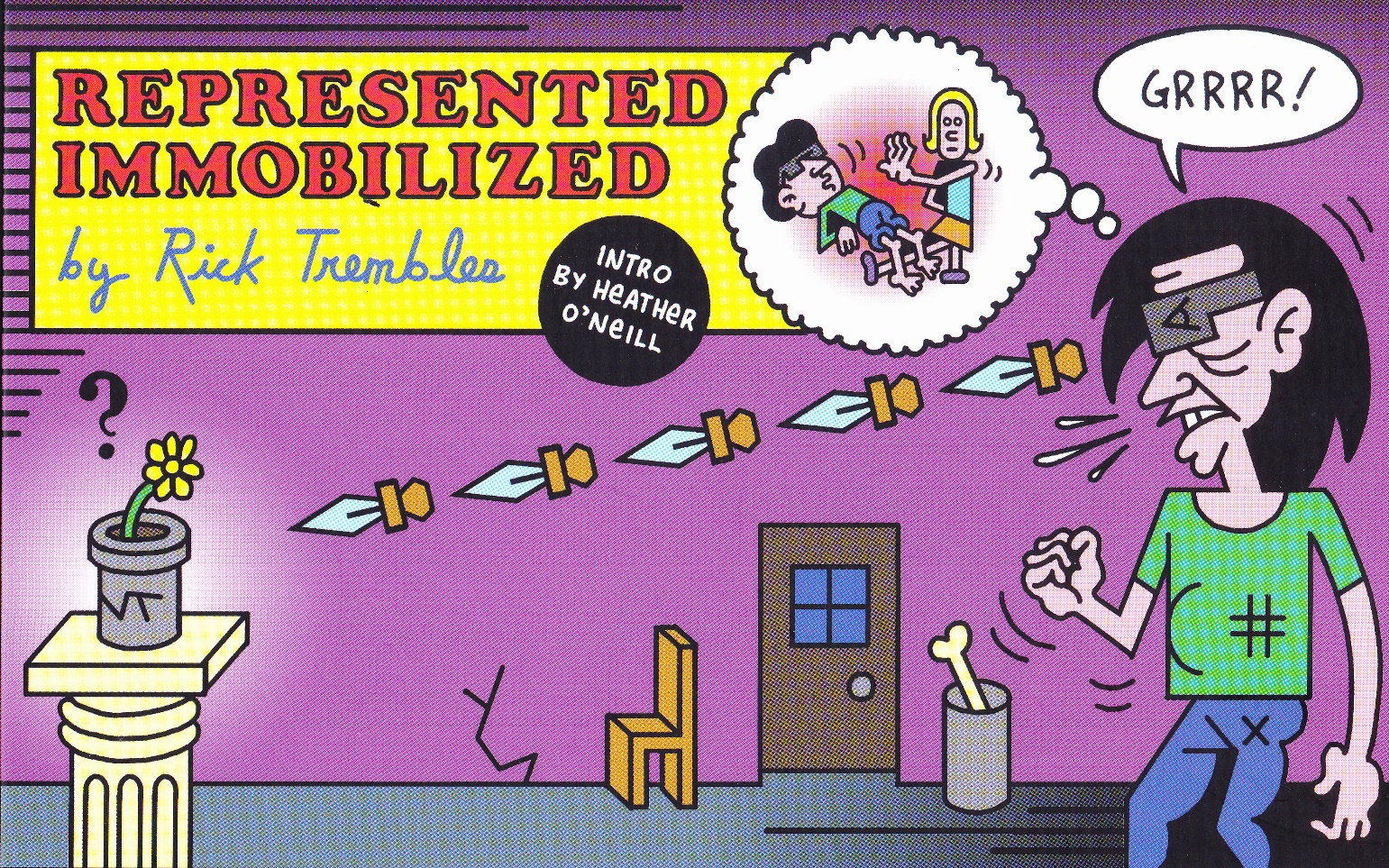 Represented Immobilized. 2021: Front cover.
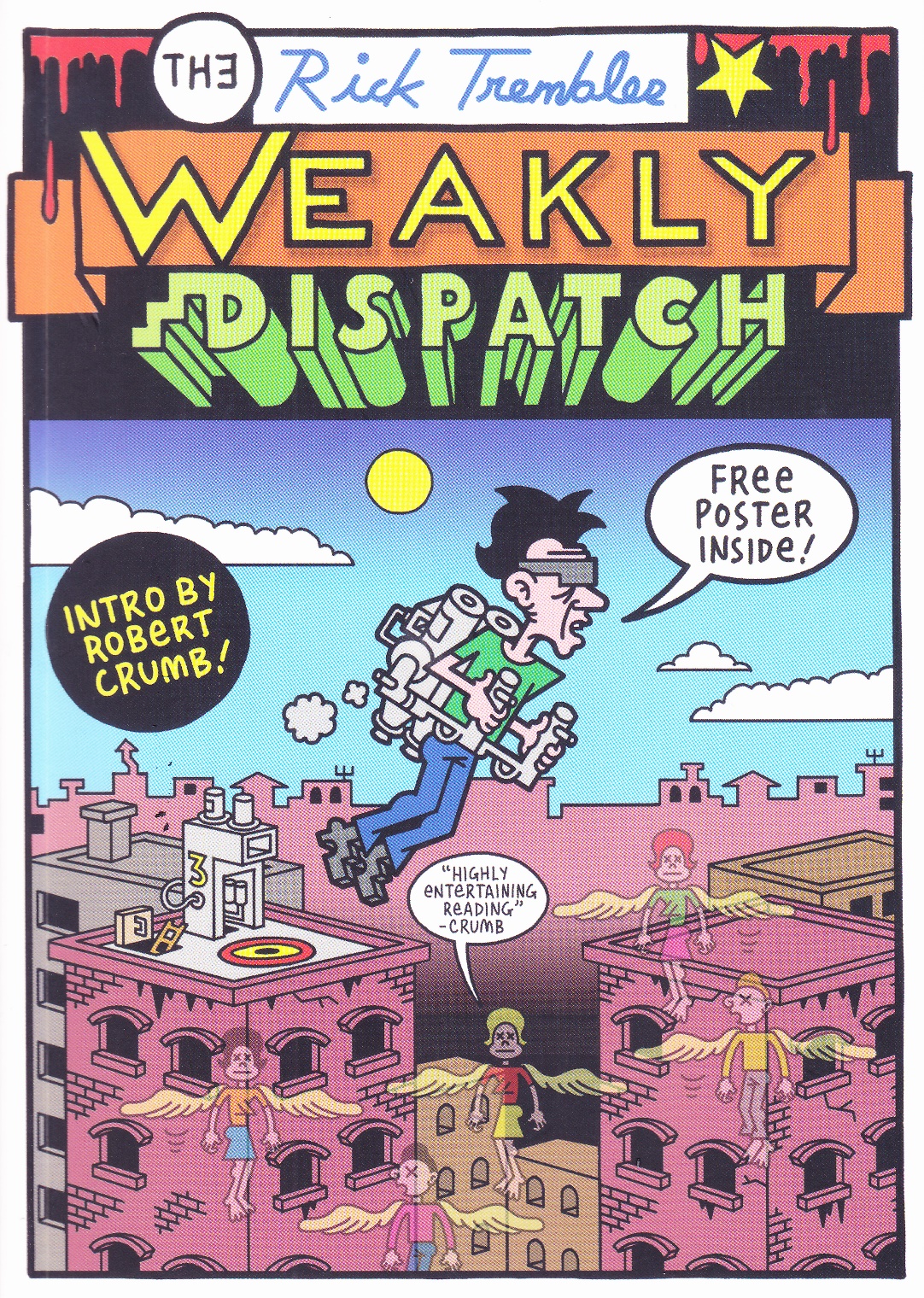 Weakly Dispatch. February 22, 2022: Front cover.