This encyclopedia comes out of my larger investigation of our Canadian heritage. How did my exploration of this world begin? It seems to have been back in elementary school grade 7 or 8, because I still remember reading the opening line in journalist Bruce Hutchison’s introduction to his book The Unknown Country. “No one knows my country neither the stranger nor its own sons.” The italics are mine since that is what resonated with me.
In the beginning, I was not really conscious of the impression it made on me that is to know my country. One of my first interests was aviation. It took me a while to recognize that my real curiosity was not aviation as such, but what Canadians did in aviation. Who was Canada’s top Ace in World War 2? Buzz Beurling, a very fascinating individual. Who were our Bush pilots or as one author colourfully called them “Pilots of the Purple Twilight”? Another time, coming out of our library one Christmas I saw in their exhibit not a single item of item of Canadian expression. That set me off exploring how we Canadians celebrated Christmas in our own way. The result was a cornucopia of images, stories, essays, music and a Captain Canuck Christmas cartoon strip. This slant applied to comic books. I drifted away from comic books as such at an early age and did not return to them until I saw Canadians using them to express their ideas. However, from that young age I was attracted to illustrations in books, the historical illustrations of C.W. Jefferies in his three volume Picture Gallery of Canadian History were a favourite of mine and in our magazines especially those by Ed McNally in Weekend Magazine. At times I found his illustrations more interesting than the articles. And so it was, my exploration of Canadian achievements, thoughts and attitudes went from topic to topic, literature, art, history, theatre, cinema and so on.
I found we are distinct. Canada emerged not 150 years ago with Confederation but more than 400 years ago when the first European immigrants began calling themselves Canadiens the French version of the ancient name Kanata that the Algonquins called a culture far up the Saguenay River. These first immigrants were not farming settlers as in the American colonies. They were merchants looking to exchange European goods for North American furs and explorers looking for a route across this vast continent to China. These were the heroic days of Canada when men from the St Lawrence valley spread over the continent. It has been said that they reached the Rocky Mountains before British Americans had crossed the Alleghenies. It was Radison and Groseilliers who showed the English that furs could be gathered through Hudson’s Bay. The father of Louisiana and founder of New Orleans is Jean-Baptiste Le Moyne de Bienville of Montréal. The Pacific coast was reached by Alexander Mackenzie in 1793 and of course the river he explored before that is named after him. Another Montréal trader Jean-Baptiste (later John) McLoughlin is the father of Oregon. This was possible because the relationships between them and the aboriginal communities were far more co-operative though not without violence than were those between the future Americans and the aboriginal communities they encountered. Indeed in this early period the encounters between aboriginals and Europeans in what would become Canada stands in stark contrast to those occurring in all other parts of the western hemisphere.
Whereas The United States was the child of a single powerful culture, England and blessed with an abundance of diverse accessible resources particularly agriculture, Canada was born out of a marriage of multiple cultures Scottish, Irish, French, English, and various indigenous. It had fewer, less diverse and accessible resources. The result was that the historical trajectories of the two nations are very different. While the future United States became economically strong enough to gain independence through conflict, Canada used negotiation over time to gain its independence. Indeed it can be said that Canada needed the British Empire to help it resist its aggressive neighbour. While the United States settled its internal differences through a civil war, again Canada settled and continues to settle its internal differences through negotiation. It can be said that these later negotiations were an extension of the earlier negotiations between fur traders and indigenous producers. The different histories have created different ethos’s for the two nations. One highly individualist and combative the other more community oriented and collegial. In one sense it has made them relief valves for each other. Canadians who prefer the U.S. world view can move there. Americans who prefer the Canadian world view can move here. Which may be why Environics pollster Michael Adams in his book Fire and Ice finds that Canadian and American attitudes are drifting further apart.
While researching and collecting this material satisfied my personal curiosity, I began to ask should I not share my findings and conclusions with others who are also interested in exploring this vast subterranean world of Canadian heritage largely unfamiliar to most Canadians? But that world is so vast what part it should I share. I chose the graphic arts because it seemed to me it was the most unexplored and so the Encyclopedia of Canadian Animation Cartooning and Illustration was born. Why an encyclopedia? By choosing this broad approach, I hope to provide as many cave entrances as possible through which future researchers can travel deeper into the many fascinating stories of individuals, companies and associations that inhabit this world. I have included as far as possible lists of sources in order to provide a first level from which a researcher can begin searching and to honour those who have also researched and written on this subject.
It is of course subject to the limitations of time and access to information that a one-person project imposes on it. If many of the entries look like research notes. That’s because they are. I put the pieces of information I gather directly into the encyclopedia as I come across them in publications or through contacts artists. Only after I have achieved a fairly comprehensive idea of what the subject is do I try to organize it into an essay. There is a great deal of serendipity in my research and so one should not equate the importance of a subject with the amount of what is said about it.
I have fitted the graphic arts genre within the context of Canadian culture. It responds to the specific questions how do Canadians (and those living in Canada) express themselves in the genre of graphic arts and how does that expression fit into the world of Canadian expression. Put another way, the encyclopedia does not so much focus on what Canadians have done in graphic arts but rather how do Canadians (and those living in Canada) use graphic arts to contribute to our heritage. For example, Hal Foster who created “Prince Valiant” is acknowledged but his career outside of Canada is not investigated in any great detail.
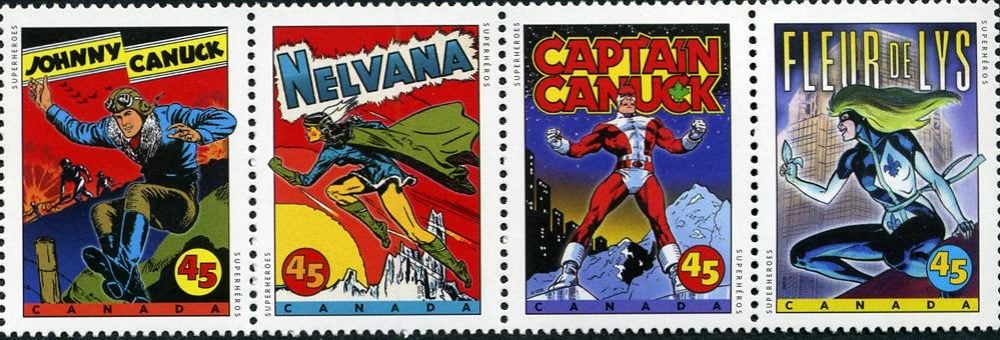
The title “Canadian Animation, Cartooning and Illustration” suggests the blurred boundaries between the three forms of graphic art. It was and is not uncommon that Canadian artists work in all three. Duncan Macpherson today considered Canada’s greatest editorial cartoonist was before that an established illustrator with Maclean’s Magazine among others. Jimmie Frise creator of “Birdseye Centre and “Juniper Junction” who I consider Canada’s greatest newspaper strip cartoonist was as greatly admired for his illustrations of Greg Clark’s columns. Blair Kitchen an animator whose life was tragically cut short, also created and cartooned the character and published the cartoon periodical The Possum. In addition, he also wrote, illustrated and published the picture book Copy Cat vs The Bullies. I could have added fine art to the website title. Creators like Franklin Arbuckle, Oscar Cahen and William Winter are known for their “fine art” but they made their living in periodical illustration and caricature. The cross fertilization does not stop there. Many of the cartoonists in this encyclopedia like Bernie Mireault and Rick Trembles have been or are musicians and songwriters as well. Musicians have used cartoonists and illustrators to create visual art for their albums. Cartoonists have created graphic versions of Canadian novels, biographies and histories. Novelists like Margaret Atwood have partnered with graphic artists like Ken Steacy to produce cartoon stories. The prominent playwright and film maker Robert Lepage has collaborated with illustrator Fred Joudain to create a graphic novel of his remarkable play Le Dragon bleu. Playwright, director, and theatre founder, Ken Gass used characters from World War 2 Canadian comic books to create his play Hurrah For Johnny Canuck. Arn Saba creator of “Neil The Horse” originated a radio musical based on his character for CBC, Morningside. Sean Scoffield’s graphic novel emerges from David Cronenberg’s film eXistenZ and Nick Craine’s Dance Me Outside emerges from Bruce McDonald’s film of the same name. The graphic arts are one entry point to the vast largely unnoticed subterranean world of Canadian expression where communities explore create and interact with each other.
So do Canadians follow their own path in the graphic arts? The answer is yes when making a living allows them to do so. In American comic books and I might add films American triumphalism and individualism is expressed in the prevalence of the superhero genre. In Canada the superhero has more often than not been treated with indifference or even a mocking or subversive attitude. But the difference runs deeper. The animation and cartooning culture of the U.S. is corporate rather than individual expression. That is it expresses a corporate goal of producing what sells as opposed to the individual or small group goal of wanting to express their vision. Predominantly U.S. comics are largely like automobiles produced by an assembly line of specialists to meet what the corporation sees as customer demand. In Canada through such structures such as the Canada Arts Council and the various provincial arts councils, artists are supported in expressing their world vision. The results are quite distinct. In the U.S. the artist can achieve wealth and celebrity but is a cog in a corporate machine. In Canada the artist largely remains in obscurity and financial insecurity, but the vision communicated is his or hers. It is this artist in whom I’m interested.
A Glossary:
I have sometimes used words with common meanings for my own purposes. I here share those purposes with you.
Cartoon refers to a work that integrates textual and image elements.
Cartoonist refers to a person who both writes the text and at least pencils and inks the images of the story article, poem etc.
Illustration refers to the image aspects of the work. It can be either integrated or be standalone amplifying a portion of the text as in a picture book.
Illustrator refers to a person who contributes at least both pencils and inks to the work but can also colour and letter it. This covers at least two types of illustrator, the illustrator whose image contribution is integrated with the text or the illustrator whose work refers to but is separate from the words. Therefore, an illustrator can be a partner co-creating the story or can be a person who simply produces visual works illustrating parts of the story or article. The context will tell the reader which illustrator it is.
Penciller is a person who draws the story or aspects of the story in pencil only.
Inker a person who draws over the pencils in ink.
Writer is a person who provides the text portion of the story. There are two types of writers. He/she may co-create the story with the illustrator or may write the text for the illustrator to organize into scenes. Or he/she simply writes the story for which the illustrator provides pictures. Again context should identify each type.
Also note that the lists of items under the headings “WORKS”. “MEDIUM” and “PRODUCT” are not comprehensive lists. They are simply places where you can find characters and the efforts of artists. They also reflect my collection.
*******************************
ACKNOWLEDGEMENTS
There are two individuals I especially want to thank. Both of them were long time associates with me almost from the time I entered the graphic arts portal, helping me to find hidden treasures of Canadian creativity and to support me when my enthusiasm for this project faltered. They are Dave Darrigo Dragon Lady manager and creator of the Wordsmith and George Flie an antiquarian dealer. His knowledge of culture particularly popular culture was encyclopedic.
Of immense help are those who have broken ground before me. Terry Mosher and Peter Desbarates whose wonderful book The Hecklers is the best history of Canadian editorial cartooning up to 1979 yet written. Combine it with the excellent series Portfoolio mostly edited by Guy Badeau and you have the most complete coverage of Canadian editorial cartooning in existence.
Peter Harris should be remembered as the first person to bring to world attention some of the 1940’s Anglophone Canadian creators and their characters in Maurice Horn’s World Encyclopedia of Comics.
Maurice Horn, brought Francophone Canadian creators to world attention. Kenneth Baker should be remembered for his pioneering work on Canadian cartoon strips in both languages.
Peter Harris was part of a group that the afore mentioned George Flie called “The Secret Six”. In addition to Peter, and George, They included George Henderson of Memory Lane a memorabilia shop and Don Hutchison, a TVO cameraman and expert on pulp magazines. This group was the first to look seriously at early Canadian efforts in cartoon strips and comic books.
Of more recent vintage, John Bell’s Canuck Comics and Invaders From The North provide a comprehensive overview of Canadian creators graphic periodicals and their publishers. Karen Mazurkewich’s Cartoon Capers has been an immense help in my investigation of Canadian animation. More recently, Ivan Kocmarek has picked up the torch. His wonderful book Heroes of the Home Front puts flesh on the bones of our knowledge about the creators of Bell Features Publishing.
Scott Dargie, my stepson, without his expertise this website would not exist, without his support I would have long ago given up on it.
Robert J. MacMillan
Brantford, Ontario